A 10-Day Beijing, Chengdu and Shanghai Itinerary
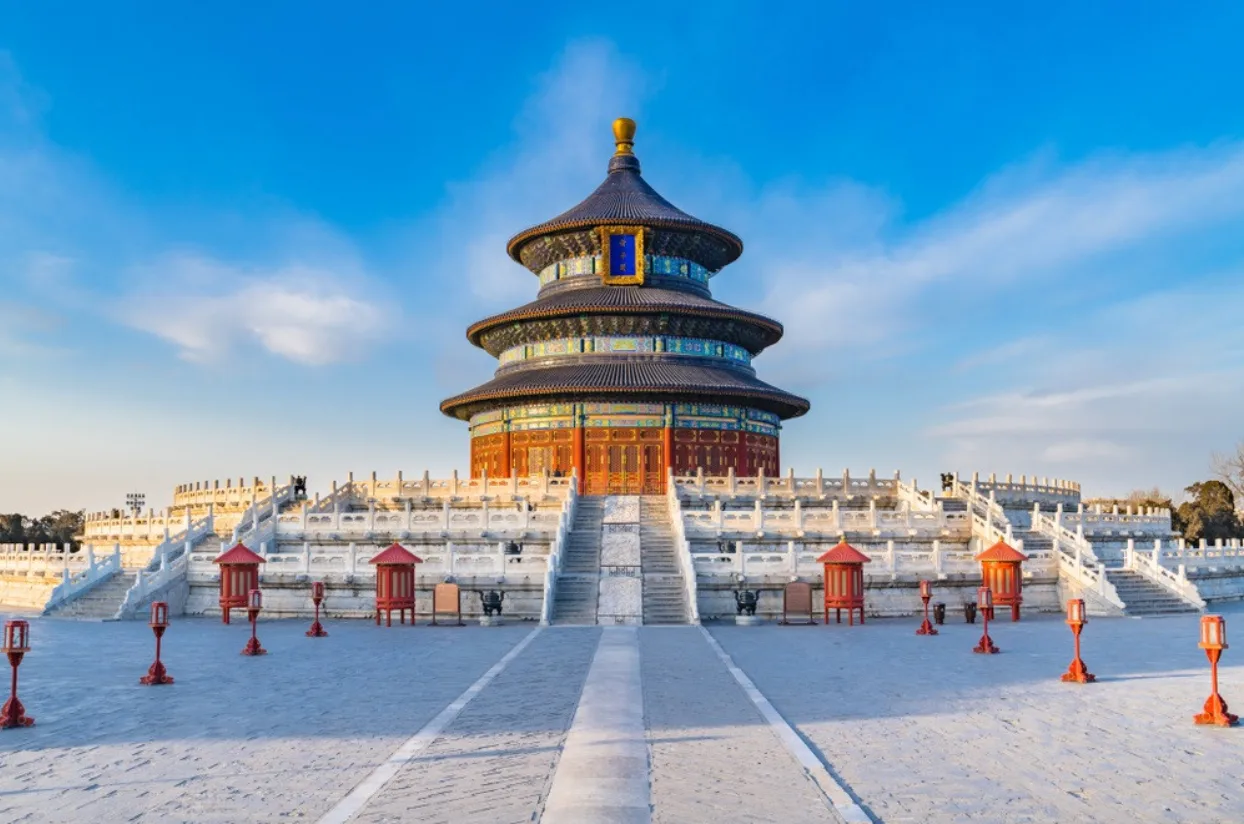
A route with three distinct chapters
This 10-day route gives Beijing four days, Chengdu three days and Shanghai three days. It begins with Beijing's imperial core and northern landmarks, shifts to Chengdu's temples, parks, pandas and Three Kingdoms history, and ends with Shanghai's museums, historic streets and riverfront skyline.
The days are organized geographically and thematically rather than as a loose list of famous places. Major sights receive dedicated time, while nearby attractions are linked into walkable or short-transfer sequences. On the final afternoon, the itinerary returns from Shanghai to Beijing by high-speed rail.
Start with a workable route
Open trisAino Planner to create an itinerary tailored to your own trip. Below, I will use the plan I generated in Planner as the day-by-day framework for this journey.
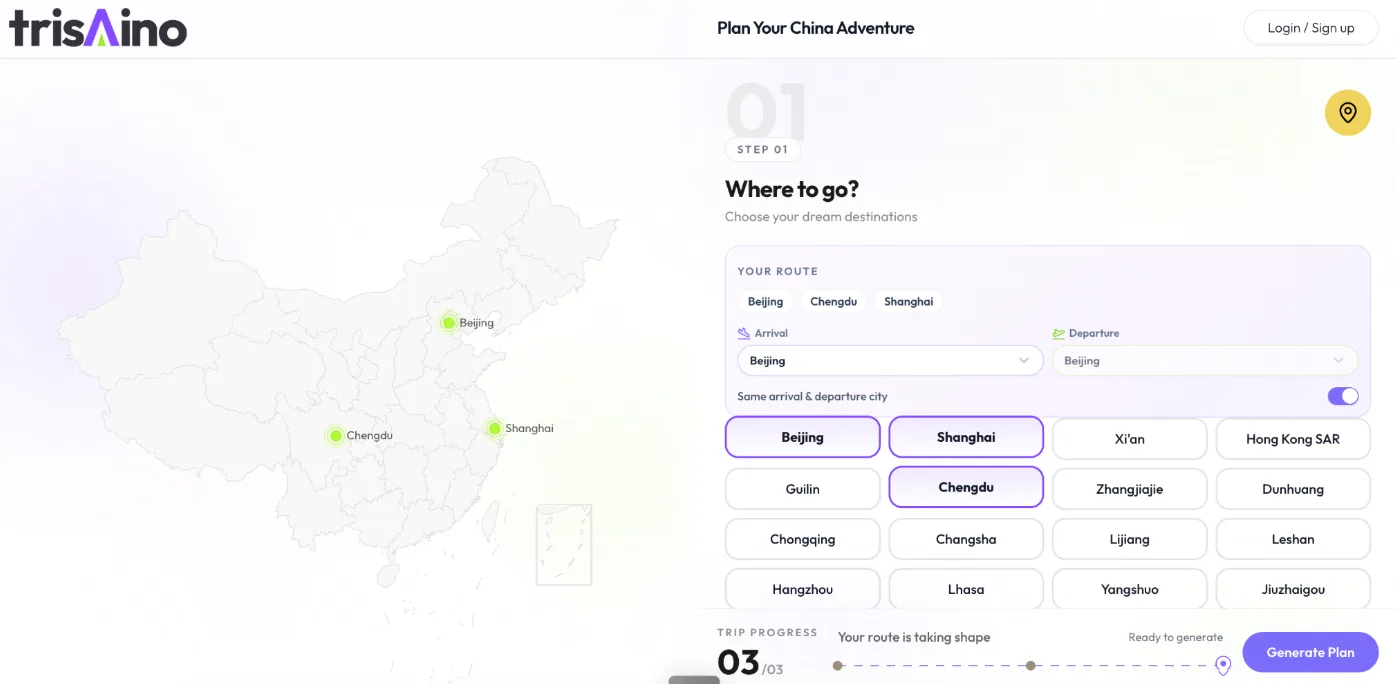
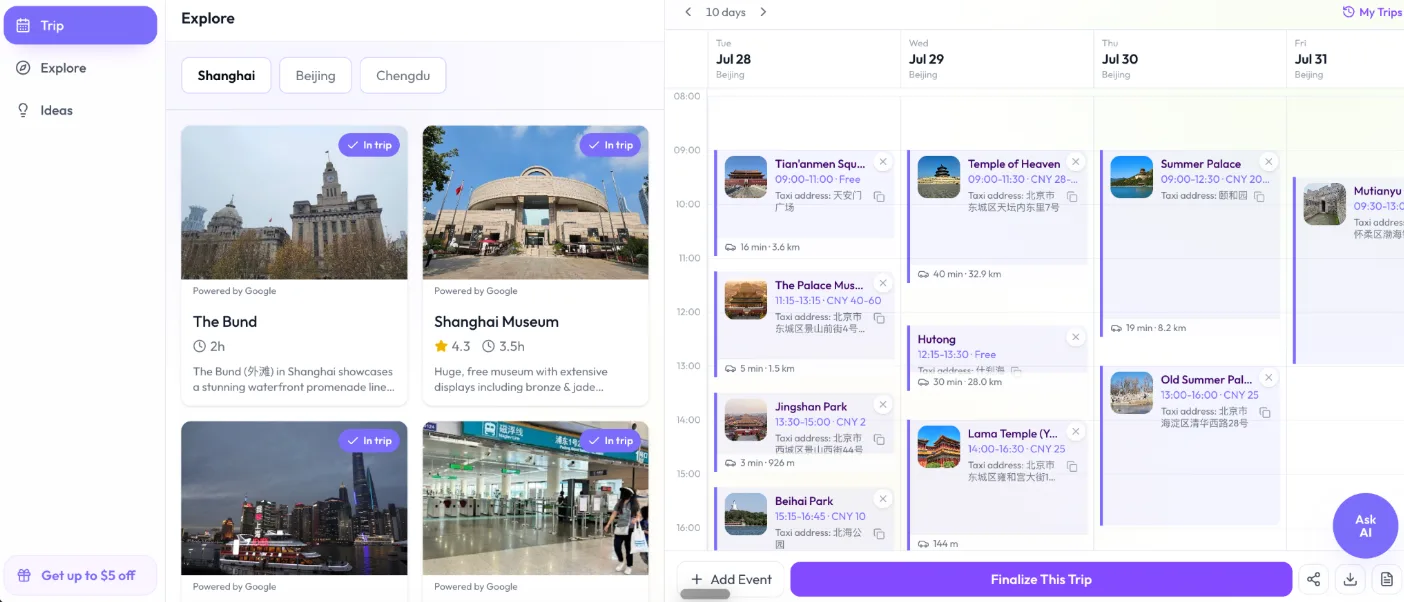
Travel during peak seasons:
Summer holiday season: **July–August **— Popular destinations, hotels, trains, and attractions can become crowded, especially in major tourist cities. China National Day Golden Week: **October 1–7 **— One of the busiest travel periods in China, with very high demand for transportation, accommodation, and attractions.
If you are traveling during these periods, we recommend booking early and contacting trisAino Concierge in advance for local assistance.
Days 1-4: Four ways to understand Beijing
Day 1: Temple of Heaven to the Forbidden City
Start earlier than the original schedule: enter the Temple of Heaven around 8:00 a.m. and allow about two hours. A practical one-way route begins at the East Gate, reaches the Hall of Prayer for Good Harvests first, then continues south through the Imperial Vault of Heaven and the Circular Mound before leaving from the South Gate. This avoids backtracking and keeps the most exposed walking out of the hottest part of the day.
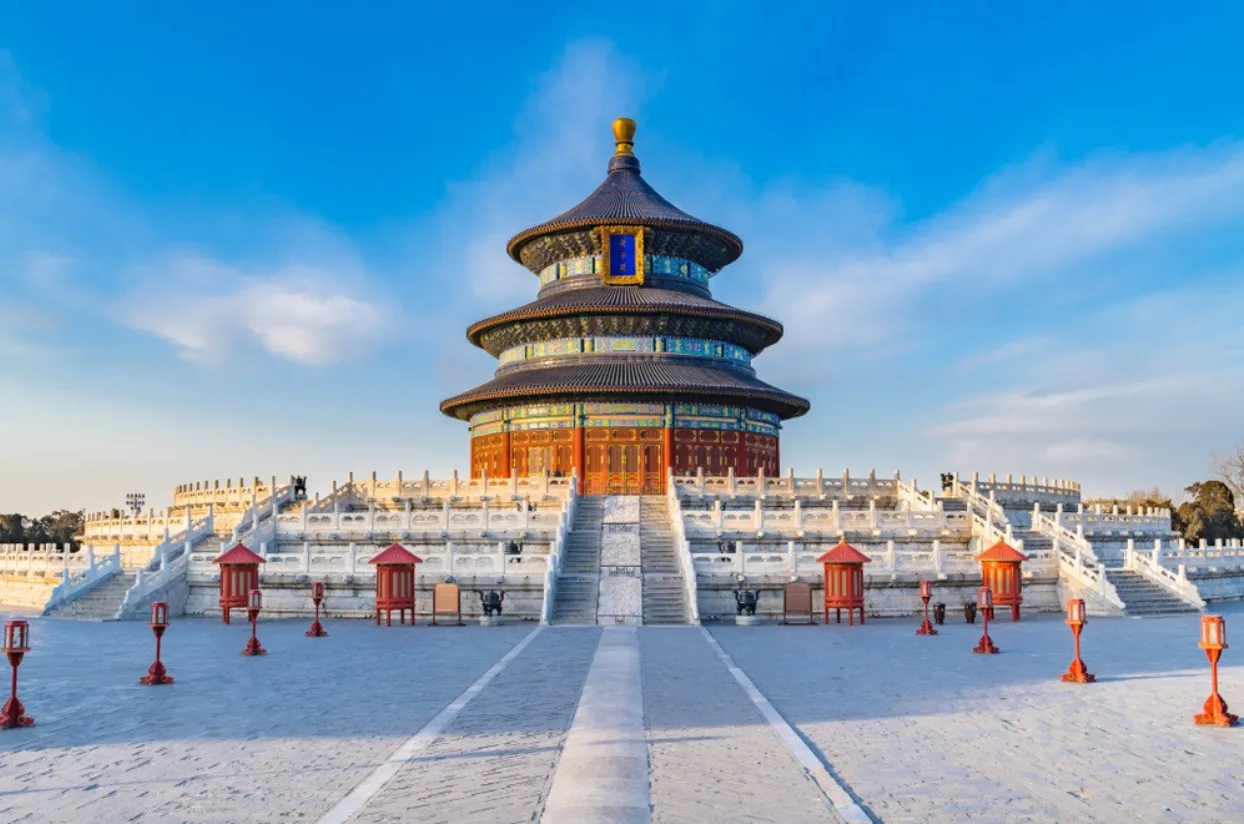
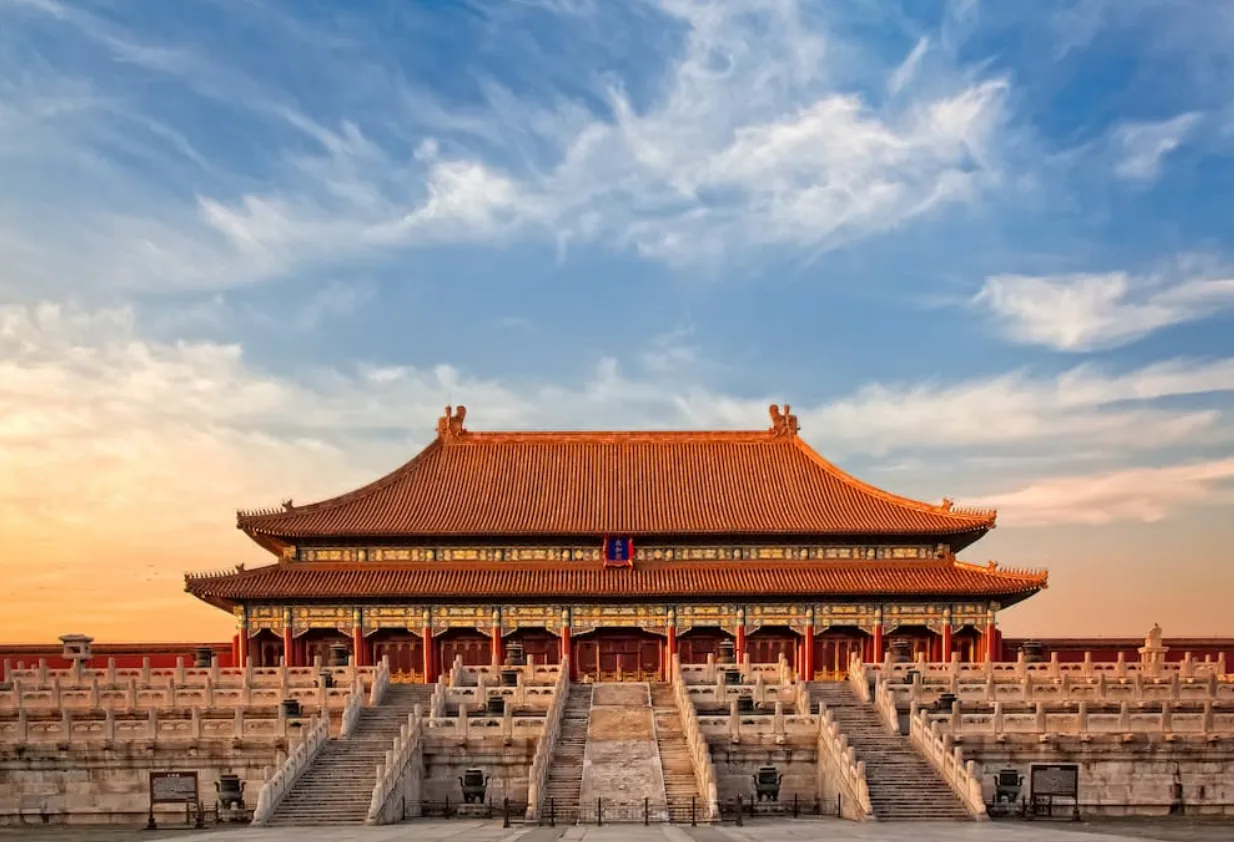
The Hall of Prayer for Good Harvests is the visual anchor of the Temple of Heaven route. Image: Agarnier1 / Wikimedia Commons.
After an early lunch, allow a generous security and transfer buffer before Tiananmen Square. Aim for the reserved Palace Museum entry window around 1:00 p.m. and spend roughly three hours following the central axis, adding only one or two side halls rather than trying to cover the entire complex. Exit through the Gate of Divine Prowess and walk directly across to Jingshan Park. The summit is most rewarding in the softer late-afternoon light, but the exact finish must follow the current palace closing time and the season's sunset.
For lunch, keep the meal quick around Qianmen so the security buffer is not lost: zhajiangmian, dumplings or a simple bowl of noodles all work better than a long roast-duck sitting. Save a fuller Beijing dinner for after Jingshan. Around the Forbidden City and Wangfujing, traveler food posts frequently recommend old Beijing dishes such as jiaoliu meatballs, cu liu mu xu and sizzling lamb, with roast duck as the more ceremonial option.
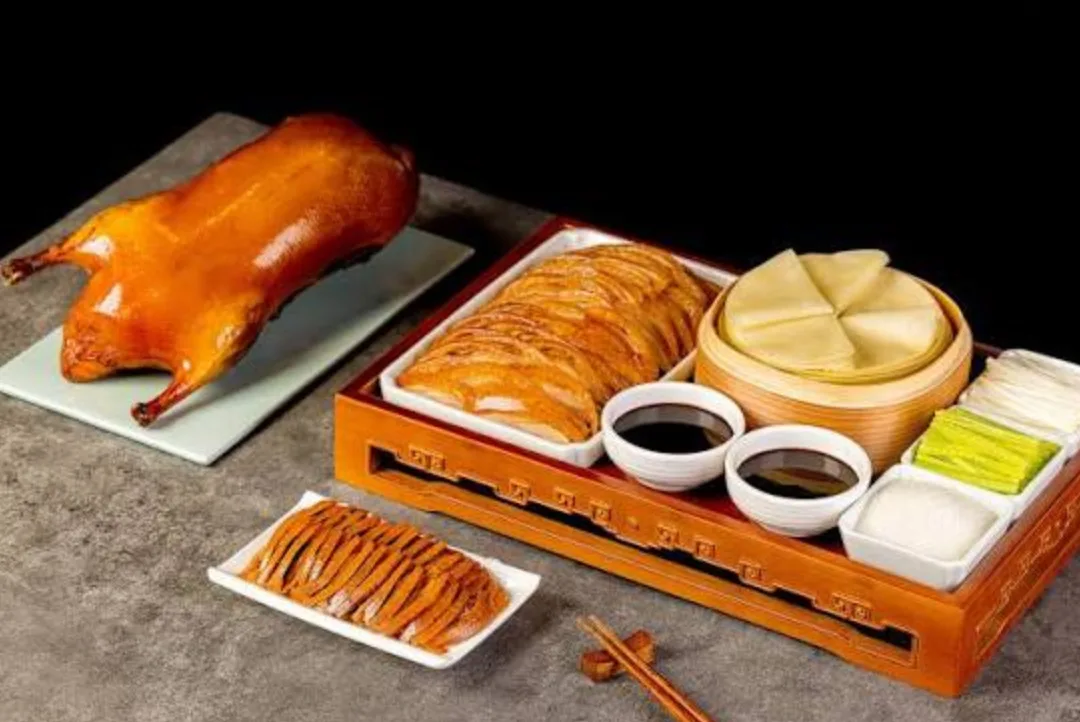
Peking duck is better saved for a relaxed dinner than squeezed into the Day 1 lunch window. Image: Ellywa / Wikimedia Commons.
Day 2: Mutianyu Great Wall and the Ming Tombs
Leave central Beijing around 6:30-7:00 a.m. so the walk begins before the largest tour groups and the midday heat. At Mutianyu, choose one route instead of trying to cover every tower: the western section is the stronger option for a longer ridge walk and broad views, while the eastern section can be paired with a shorter visit and the toboggan descent when operating. Allow three to four hours on site, including the shuttle and cable-car queues.
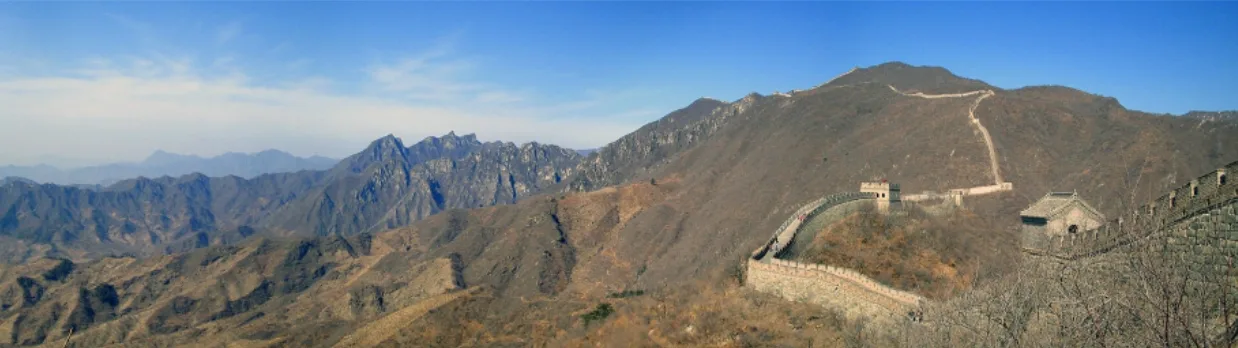
Mutianyu follows a steep mountain ridge, which is why route choice matters more than the number of towers covered. Image: Fabien Dany / Wikimedia Commons.
Continue to the Ming Tombs only after lunch and a realistic road transfer. The complex is too large to treat as one attraction, so choose one principal tomb—commonly Changling or Dingling—and add the Sacred Way only if time and energy allow. Plan to leave the area by late afternoon; this remains a long excursion day, not a quick morning at the wall followed by a full second sightseeing programme.
Day 3: Imperial gardens and Olympic Beijing
Enter the Summer Palace close to opening time and reserve at least three hours. A one-way visit can move from the East Palace Gate through the main ceremonial buildings and Long Corridor, then toward Longevity Hill and the north side of the park. Decide in advance whether the priority is the lakeside walk, a boat ride or the hill temples; combining all three makes the morning much longer than it appears on a map.
After lunch, take the short transfer to the Old Summer Palace and focus on the Western Mansions ruins and the surrounding landscape rather than crossing the entire park. Leave a rest break before Beijing Olympic Park and arrive near dusk. Traveler routes consistently save the Bird's Nest and Water Cube for the evening, when the exterior lighting is the main experience; viewing the buildings from the public park is enough unless an interior visit is a specific priority.
Day 4: Temples, hutong lanes and the Drum and Bell Towers
Reach the Lama Temple soon after opening and allow about 90 minutes, then walk along Guozijian Street to the Confucius Temple and Imperial College. The two sites are close enough to form one compact morning, but the second visit does not need another two and a half hours unless you plan to read the exhibitions in detail.
After lunch, turn the hutong section into a deliberate city walk rather than a vague two-hour stop. One workable line runs from the Guozijian and Wudaoying area through quieter lanes toward Baochao Hutong and the Drum and Bell Towers. Keep the towers as the endpoint and check their last admission time before setting out. If the morning runs late, shorten the hutong walk instead of rushing through the temples.
Getting from Beijing to Chengdu
For this exact 10-day schedule, the practical choice is a direct evening flight after Day 4. Shorten the hutong walk and leave the Drum and Bell Towers area by about 3:30-4:00 p.m. Allow roughly 45-90 minutes to reach the booked Beijing airport, arrive about two hours before departure, then budget about three hours in the air and another 45-75 minutes from the Chengdu airport to the hotel. The realistic door-to-door transfer is about six to seven hours, depending on whether the flight uses Capital or Daxing in Beijing and Tianfu or Shuangliu in Chengdu.
High-speed rail is the calmer alternative, but it does not fit between the current Day 4 evening and Day 5 morning. Trains from Beijing West or Beijing Fengtai to Chengdu East take approximately 7.5-12 hours before local transfers, so choosing rail means turning Day 5 into a travel day or removing part of the Beijing programme. Recheck the actual flight or train shown on the booking because departure airports, stations and journey times vary by service.
Days 5-7: Chengdu at a slower, more local pace
The schedule below assumes the evening flight from Beijing has arrived the night before. If the intercity journey instead reaches Chengdu around midday, keep People's Park, Kuanzhai Alley and the evening performance together, and move Wenshu Monastery to another morning.
Day 5: Wenshu Monastery, People's Park and Sichuan opera
Begin at Wenshu Monastery around 9:00 a.m. and spend 60-90 minutes in the temple and garden before the city becomes busier. From there, travel to People's Park before lunch. The park is not a checklist attraction: secure a teahouse seat, order a bowl of tea and leave time to watch the city's everyday social life. Traveler posts recommend arriving early if a lakeside table matters.
Use Kuanzhai Alley as a compact late-afternoon walk rather than a two-and-a-half-hour destination. Enter through one lane, sample a few snacks, and leave before the evening performance check-in. Confirm the actual Shufeng Yayun show time on the ticket and arrive early enough to find the theatre; the opera, face-changing and related acts should be the main event of the evening, not the fifth rushed stop of the day.
This is also the easiest Chengdu day to build around food. Pick up a freshly baked guokui near Wenshu Monastery, then try one or two small dishes around People's Park or Kuanzhai Alley—dandan noodles, Zhong dumplings or sweet-water noodles are more useful than attempting a full street-food checklist. If hotpot is the priority, eat early before the opera; Xiaohongshu diners around Wenshu Monastery repeatedly advise taking a queue number by about 5:30 p.m. at popular neighborhood shops.
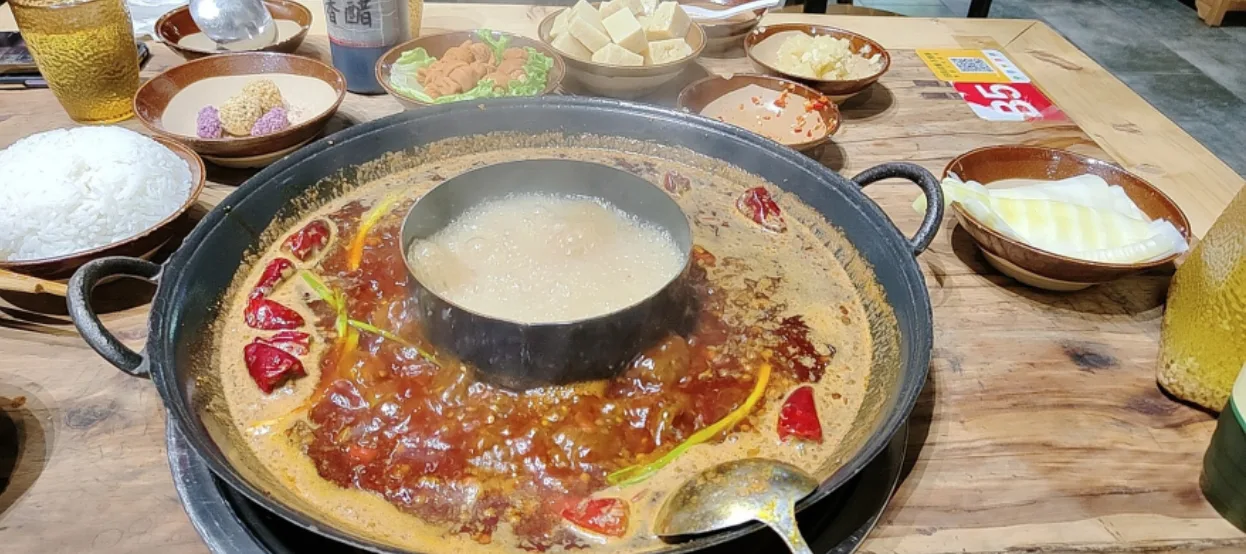 An early hotpot dinner can fit before the Sichuan opera when the queue is managed in advance. Image: Fumikas Sagisavas / Wikimedia Commons.
Day 6: Pandas and the history of Chengdu
Move the Panda Base much earlier. Recent traveler itineraries repeatedly recommend arriving for the 7:30 a.m. opening because pandas are generally more active in the cool morning. Choose the priority enclosures in advance, start with the young-panda or nursery areas, and use the internal shuttle selectively—the grounds are large, but spending five hours there usually pushes the best viewing into the hottest and least active part of the day.

A morning visit gives the best chance of seeing active pandas at Chengdu Research Base. Image: Mikael Häggström / Wikimedia Commons.
Leave around noon, have lunch and return to the center for Chengdu Museum in the mid-afternoon. Reserve the museum in advance because daily entry can be limited, and select two or three exhibition themes instead of trying to read every gallery before closing. This creates a sustainable day: an early outdoor visit followed by a cooler indoor afternoon.
Day 7: Three Kingdoms history, Jinli and Du Fu
Start at Wuhou Temple around 9:00 a.m. and follow the main historical displays in sequence rather than wandering between courtyards. Jinli Ancient Street is directly beside the complex, so use it as the exit route and lunch stop. Two hours at Jinli is rarely necessary unless shopping and food are priorities; the advantage of this pairing is proximity, not the number of stalls covered.
Reach Du Fu Thatched Cottage after a proper lunch break and allow two to three hours for the garden, reconstructed cottage and literary displays. Traveler feedback notes that both Wuhou Temple and the cottage involve more walking than expected, so the day works best with comfortable shoes and without adding another distant evening attraction.
Getting from Chengdu to Shanghai
To preserve the Day 8 museum start, take a direct evening flight after Day 7. Leave Du Fu Thatched Cottage by about 4:00-4:30 p.m., collect luggage and allow 45-75 minutes to the booked Chengdu airport, plus about two hours for check-in and security. The flight itself is usually around three hours; reaching a central Shanghai hotel from Hongqiao or Pudong generally brings the full door-to-door transfer to about six to seven hours.
A direct high-speed train is possible, but current services take roughly 11-13 hours before station transfers and therefore consume an entire sightseeing day. If you prefer rail, add a dedicated transfer day or remove one Chengdu or Shanghai day. If the flight arrives in Shanghai on the morning of Day 8 instead, keep Nanjing Road and the Bund that afternoon and move the museum to another day.
Days 8-10: Shanghai from museum galleries to the Huangpu River
The schedule below assumes the evening flight from Chengdu has arrived the night before. Keep the first morning flexible if the flight is delayed, because the Shanghai Museum reservation is the least forgiving part of the day.
Day 8: Shanghai Museum, Nanjing Road and the Bund
Begin at the Shanghai Museum East around 10:00 a.m. Since September 15, 2024, individual visitors have been able to enter without an advance reservation. Bring your original valid identity document and enter through the B1 East Gate after the security check. Allow two and a half to three hours for a first visit, then continue by metro to Nanjing Road and the Bund. The East branch is normally closed on Tuesdays, except on national public holidays.
In July and August, do not begin the full Nanjing Road walk in the hottest mid-afternoon. Use an indoor lunch and rest break, then start near People's Square around 4:30-5:00 p.m. and walk east as the temperature eases. Reach the Bund before dusk, view the historic facades in daylight, and stay as the Pudong skyline lights up. The sequence remains museum–square–shopping street–riverfront, but the experience is much better when the outdoor section is timed for evening.
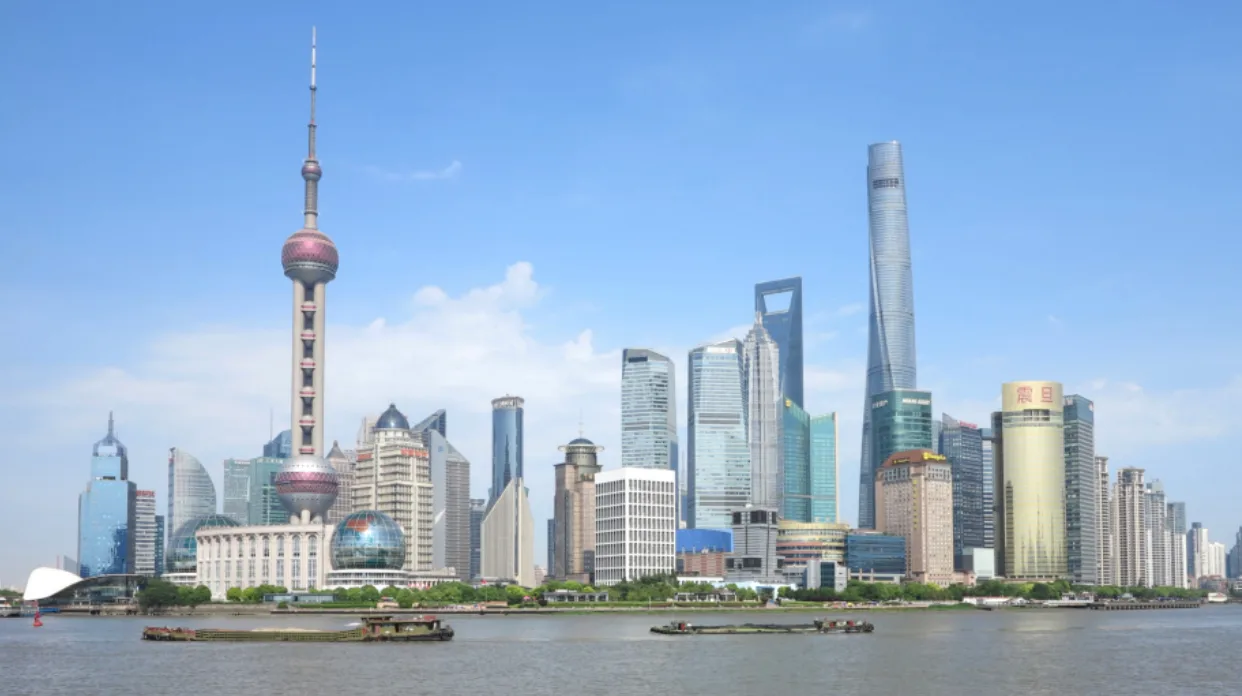
The Bund walk is most rewarding when daylight transitions into the evening skyline. Image: Pxfuel / Wikimedia Commons.
Nanjing East Road is a good place to turn dinner into part of the walk. For a light meal, choose shengjian, pork-chop rice cakes or sesame noodles with curry beef soup; for something more substantial, look for yellow-croaker noodles, xiaolongbao or a local-style noodle topping. Xiaohongshu food routes place many of these old-school choices on or just off Nanjing East Road, so one stop is enough before continuing to the Bund.
Day 9: Old Shanghai and the former French Concession
Enter Yuyuan Garden close to opening time, before the surrounding commercial streets become crowded. Spend about 90 minutes inside the classical garden, then continue through the bazaar and Shanghai Old Street for an early lunch. Treat the shopping streets as atmosphere and food stops rather than a second multi-hour attraction.
After the midday heat, choose one focused former French Concession route instead of four hours of unstructured walking. A practical line connects Wukang Mansion, Wukang Road and Anfu Road, with a café break along the way. Travel separately to Tianzifang in the late afternoon and explore its shikumen lanes for about an hour. Shanghai travel posts consistently favor this slower, neighborhood-based approach over racing between every photogenic street.
Near the old city, xiaolongbao or scallion-oil noodles make an efficient early lunch. Save a proper Shanghai-style dinner for the former French Concession or Tianzifang area, where dishes such as red-braised pork, stir-fried river shrimp and eel in scallion oil offer a broader introduction to local cooking than relying only on bazaar snacks.
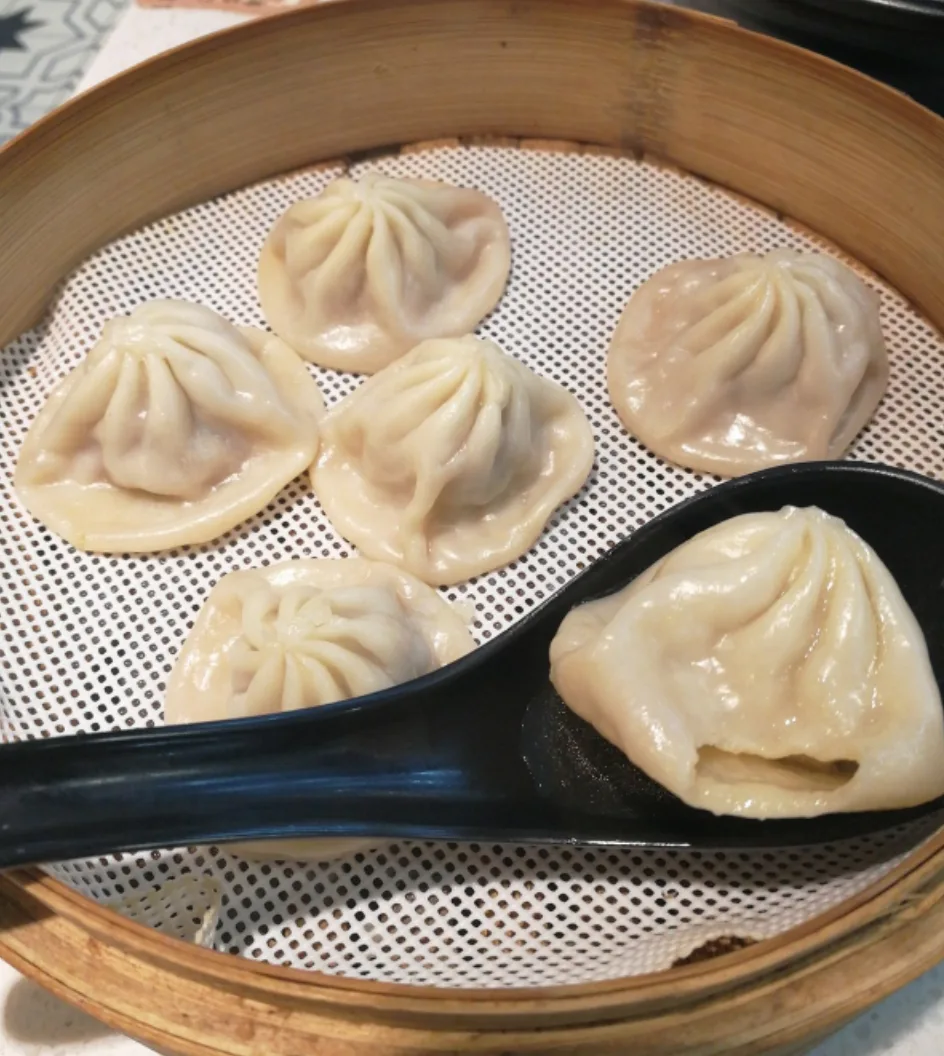
Xiaolongbao makes a practical early lunch around the old city before the afternoon neighborhood walk. Image: Robigasp / Wikimedia Commons.
Day 10: Jade Buddha Temple, a river cruise and the return to Beijing
Visit the Jade Buddha Temple near opening time and allow 60-90 minutes. Leave by about 10:00 a.m. so there is enough time to reach the correct cruise pier; Shanghai river cruises depart from more than one location, and the ticket should be checked for the pier, sailing time and required check-in buffer.
A late-morning Huangpu River cruise can still work before the 5:00 p.m. train, but keep the cruise itself to roughly an hour and avoid adding lunch far from the hotel or station. Collect luggage early and plan to reach the departure station 45-60 minutes before the train. Confirm which Shanghai station is printed on the ticket—the final day is only comfortable if the riverfront visit, luggage collection and station transfer are treated as one timed sequence.
Why this version of the route works
The itinerary gives each city a different narrative instead of repeating the same kind of sightseeing. Beijing is divided into four focused themes, Chengdu balances headline attractions with local culture, and Shanghai moves from the civic center through historic neighborhoods to the river.
· Four Beijing days separate the imperial center, the northern excursion, the royal gardens and the hutong-temple district.
· Chengdu's schedule alternates between slow city life, pandas, museums and historic-literary sites.
· Shanghai's first two days form clear geographic lines, while the final half-day closes the trip from the river.
· Adjacent attractions are grouped together, reducing unnecessary backtracking within the sightseeing schedule.
The result is a detailed route with a visible beginning, middle and end: imperial Beijing, human-scale Chengdu and outward-looking Shanghai. It covers many major sights, but the organization prevents the trip from feeling like an unconnected checklist.
Frequently asked questions
Is four days in Beijing enough for this itinerary?
Four days cover the central imperial axis, Mutianyu and the Ming Tombs, the major northwest gardens, and a temple-and-hutong day. Each day is full, so reservations and realistic transfer times matter.
Which days are the most intensive?
Days 1, 4, 5, 8 and 9 each contain four scheduled stops. Traveler comments describe similar Beijing schedules as highly intensive. The route remains workable when adjacent places are grouped, but the safest adjustment is to shorten the final stop rather than compress every visit.
Should I fly or take the train between these cities?
For this compact 10-day version, fly from Beijing to Chengdu after Day 4 and from Chengdu to Shanghai after Day 7, allowing about six to seven hours door to door for each transfer. High-speed rail takes roughly 7.5-12 hours on the first route and 11-13 hours on the second, so either rail journey needs a dedicated travel day.
Can this 10-day China itinerary be customized?
Yes. The route can be adjusted around your arrival and departure cities, travel pace, interests, and preferred transport. You can shorten or extend individual stops, replace attractions, or end the trip in Shanghai instead of returning to Beijing. Use the trisAino Planner to build a version that matches your actual flight details and travel preferences.
What if I need help turning this itinerary into a trip I can actually follow?
Use the trisAino Guide to prepare the practical details behind the route, including payments, local apps, transport, attraction bookings and other arrival essentials, with detailed screenshot-based instructions. If you run into a problem that the guides cannot solve, trisAino Concierge connects you with human support when you need more personalised help. You can also use the service banner on this page to compare the available support options