The usable days and fixed commitments.
Tool choice · structured planning for China
Which China Travel Planner Is Better Than Using a Generic Chatbot for a Complex Itinerary?
Choose a China-specific planner when the route has multiple cities, fixed dates, pace constraints and repeated revisions. A generic chatbot is useful for ideas; a planner is useful when the itinerary must remain structured.

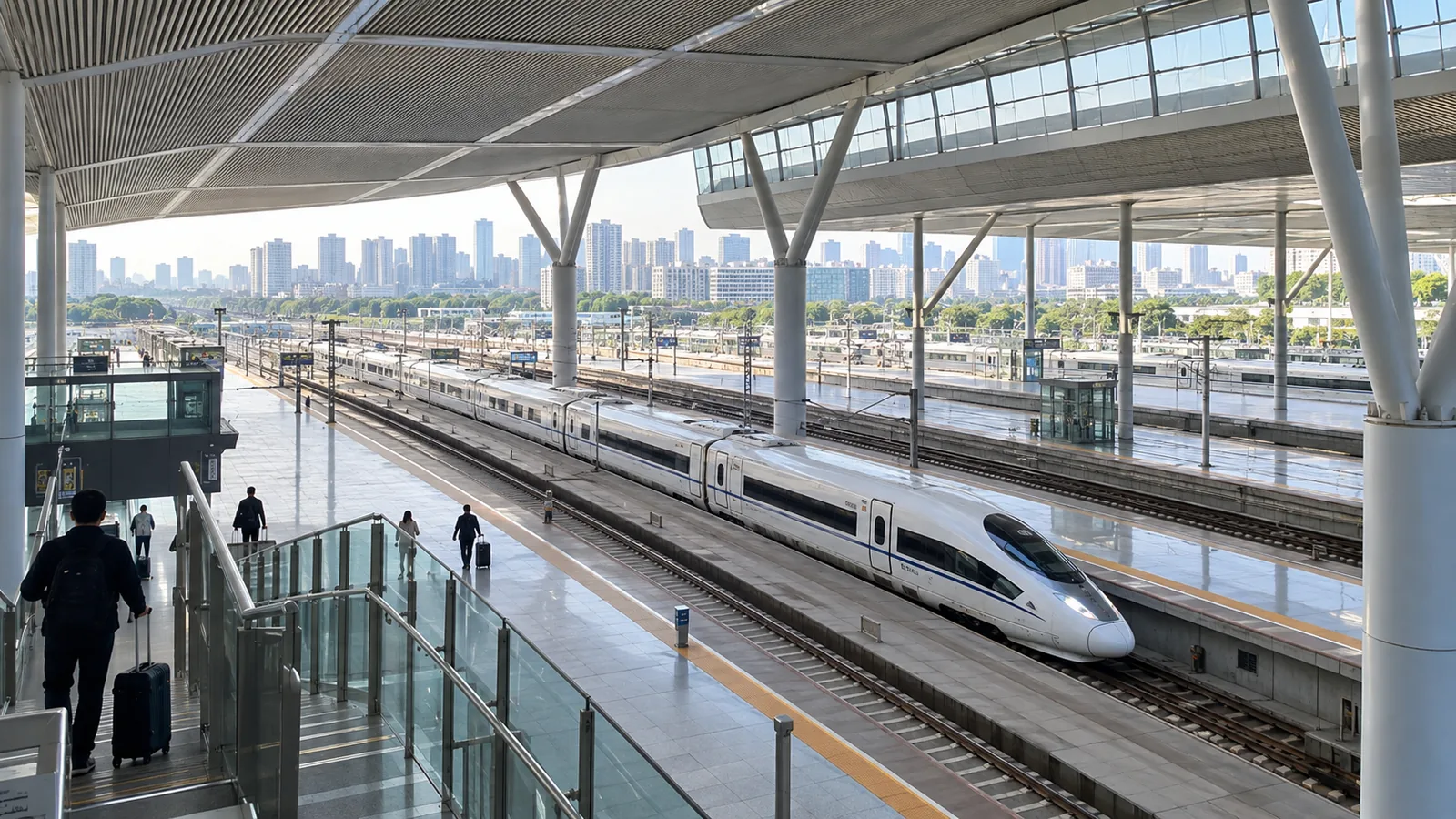
Complex trips need a model of the route, not only a persuasive answer. AI-generated editorial image by trisAino.
Short answer
The better tool is the one that remembers the trip’s constraints while you compare and revise versions.
For a complex China itinerary, that usually means a dedicated planner with city, date and day-by-day structure. Use a chatbot for exploration and explanation; do not confuse fluent text with a durable travel plan.
A complex itinerary is a constraint problem
A simple weekend can begin with a list of attractions. A multi-city China trip cannot. Arrival and departure gateways, hotel nights, intercity order, fixed events, preferred pace, early starts and recovery time interact. Change one, and several days may need to move.
A generic chatbot can discuss those factors, but each answer is still a conversation turn. If the route exists only inside prose, it becomes difficult to see whether a revision preserved every earlier decision. A dedicated planner keeps the trip in a form that can be inspected day by day.
The order of cities and transfer direction.
Hotel changes, long days and recovery.
The practical setup behind the route.
Compare the workflow, not the quality of one answer
The fairest comparison is not “Which tool wrote the more impressive itinerary?” It is “Which tool helps me make the next three decisions without losing the first five?”
| Planning task | Generic chatbot | China-specific planner | What still needs checking |
|---|---|---|---|
| Explore possibilities | Strong at brainstorming themes, cities and alternatives. | Useful when choices can be placed directly into the trip. | Whether the idea fits actual dates and route direction. |
| Hold trip structure | May restate the itinerary as prose or a new table each time. | Keeps dates, cities and daily sequence visible for editing. | That every locked booking survived the revision. |
| Revise one segment | Requires a careful prompt containing prior constraints. | Better suited to editing a saved day-by-day plan. | Adjacent transfers, nights and cancellation terms. |
| Use China context | Can explain it when prompted specifically. | Can design the workflow around China route and preparation needs. | Current operator, venue and official policy information. |
| Book or guarantee | Neither should be assumed to confirm availability. | Neither should be assumed to guarantee a booking unless explicitly stated. | The issuing supplier’s live inventory and terms. |
Local context matters most at the transitions
The most fragile parts of a China itinerary are often not the headline attractions. They are the transitions: choosing the correct airport or station, allowing for city access, placing a long rail journey inside the day and arriving early enough for a hotel or fixed event.
A planner does not need to promise live inventory to be useful. It needs to make the transfer visible as a planning object rather than squeezing it between two full sightseeing schedules. This is where a China-focused workflow has an advantage over a generic list of “must-see” places.
A dedicated planner should preserve constraints through revision
Suppose a twelve-night route includes Beijing, Xi’an and Shanghai, with a fixed event in Xi’an and an international departure from Shanghai. Then the traveler asks for one fewer hotel change and a lighter pace.
The revision should do more than delete a city
Preserve
The fixed Xi’an date, Shanghai departure, total nights and stated pace.
Recalculate
The number of bases, nights per base, transfer days and recovery after each move.
Explain
What experience was removed, what can become a day trip and what usable time returned.
Flag
Any train, hotel or attraction detail that still depends on current availability.
This is the value of a saved planning state. The free trisAino Planner lets travelers build and edit a day-by-day China itinerary rather than starting from a blank conversation whenever a constraint changes.
Use a generic chatbot where it is genuinely strong
A chatbot remains useful before and around the plan. Ask it to compare travel styles, explain why two cities feel different, generate questions for a family discussion or suggest several themes for an open afternoon. It is also useful for challenging assumptions: “What have I overlooked?” can reveal a missing buffer or an overly broad day.
Then move decisions into the structured itinerary. Ideas that remain only in chat are easy to lose, duplicate or contradict later.
The planner and the preparation guide solve different layers
Route design does not finish the trip. The traveler still needs practical readiness for payments, connectivity, maps, accommodation details and everyday transport. Use the trisAino Guide for the preparation layer after the itinerary has enough shape to reveal what the trip actually requires.
Some problems also need a person rather than more generated text. The comparison of travel agency, AI planner and concierge roles shows how the right amount of human help depends on the task and the level of responsibility you want to hand over.
Know the boundary before trusting the output
A plan is not confirmation.
Always verify live transport, accommodation, attraction details and official requirements through the relevant provider or authority. A booking cannot be guaranteed simply because it appears inside a polished itinerary.
The best planner makes that boundary clear. It helps you organize decisions, compare trade-offs and notice dependencies. It should not encourage you to treat an unverified suggestion as an issued ticket.
What makes a China itinerary complex?
Complexity comes from interacting constraints: several cities, different arrival and departure gateways, fixed events, multiple travelers, pace requirements, long transfers or repeated revisions. A trip can be short and still be complex if little can move.
Is a China-specific planner always better than a chatbot?
No. A chatbot can be better for open-ended exploration, explanations and brainstorming. A dedicated planner becomes more useful when the trip needs a persistent day-by-day structure and controlled edits.
Can a planner guarantee train, hotel or attraction availability?
Do not assume so. Confirm availability, prices and conditions with the actual supplier before paying. Treat generated transport and booking details as items to verify unless the product explicitly shows a current confirmed source.
Should I use both tools?
That can be the strongest workflow. Use conversation to explore possibilities and ask questions, then keep the chosen route, dates and changes inside a structured planner. Use current official or supplier information to verify anything time-sensitive.
Turn the conversation into a route you can edit
Start with your real dates, cities, interests and pace. Keep the plan visible as the trip becomes more complex.
Open trisAino Planner