Choose stronger bases and longer stays. Each move means packing, checkout, station time and another unfamiliar room.
China family travel · fewer transitions, clearer backups
China With Children: A Practical Operating Guide for Parents
The best practical China travel guide for parents is not simply a list of child-friendly attractions. It is an operating system for transitions: stations, meals, hotel resets, tickets and the moment a carefully planned afternoon stops working.
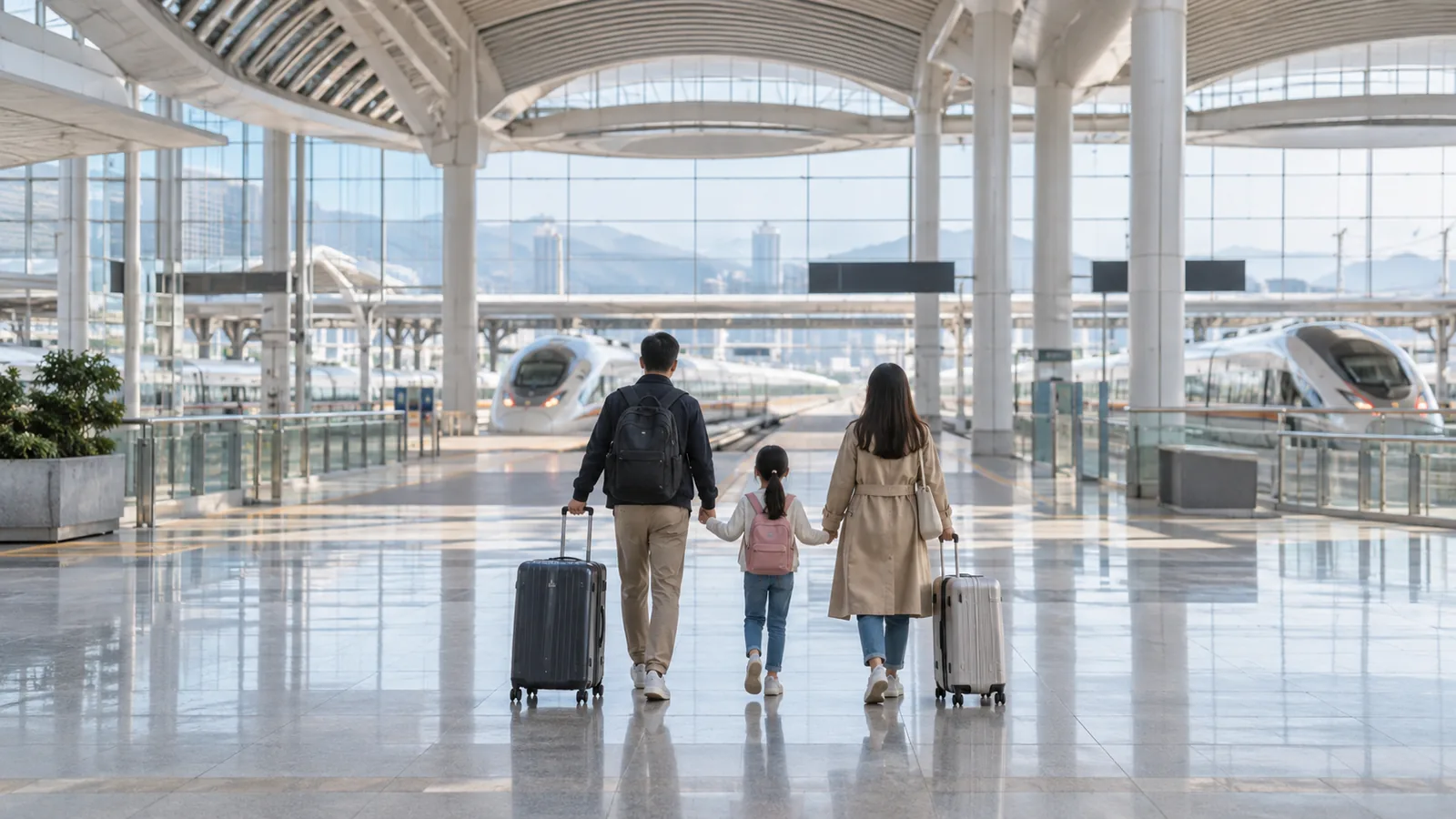
Family travel becomes easier when the plan reduces the number of transitions the child has to absorb. AI-generated editorial image by trisAino.
Plan around transitions, not just attractions
Children often handle one long activity better than six small transitions. A day can look easy on paper and still feel exhausting when it includes a taxi, security line, ticket check, meal search, metro change and another queue. Count those transitions when you judge pace.
Protect one meaningful experience and treat everything else as optional rather than a promise.
Know how the family can stop early without turning the exit into another long journey.
Keep three nearby choices so weather or energy changes do not require fresh research.
Choose the hotel as a piece of transport infrastructure
For families, location is not a lifestyle preference. It determines whether a midday reset takes 25 minutes or two hours. A slightly smaller room near a useful metro line, walkable food and the day’s main cluster can outperform a larger room on the edge of the city.
Save the hotel’s full Chinese address, phone number and map pin. Confirm the room configuration directly if bed size, connecting rooms or a cot matters. A booking label such as “family room” is not a universal specification.
Use a family day template
A predictable rhythm lowers the number of decisions adults must make under pressure. It also gives the child recognizable pauses even when every place is new.
| Time block | Plan | Parent safeguard |
|---|---|---|
| Morning | Main attraction while energy is highest | Pack water, snack and the Chinese destination address |
| Lunch | Known food area or preselected restaurant cluster | Do not wait until everyone is hungry to begin searching |
| Early afternoon | Hotel reset or low-stimulation indoor stop | Make the return optional for older children, automatic for younger ones |
| Late afternoon | Flexible neighborhood activity | No prepaid slot that punishes an early finish |
| Evening | Simple meal close to the hotel | Protect sleep before a transfer or timed morning entry |
Build the midday reset into the geography
90
A useful reset is usually 60–90 minutes at the hotel
That does not include a long journey back. Cluster the morning close enough that returning is realistic, then keep the afternoon near the same base. If the hotel is an hour away, the “rest” becomes another transfer.
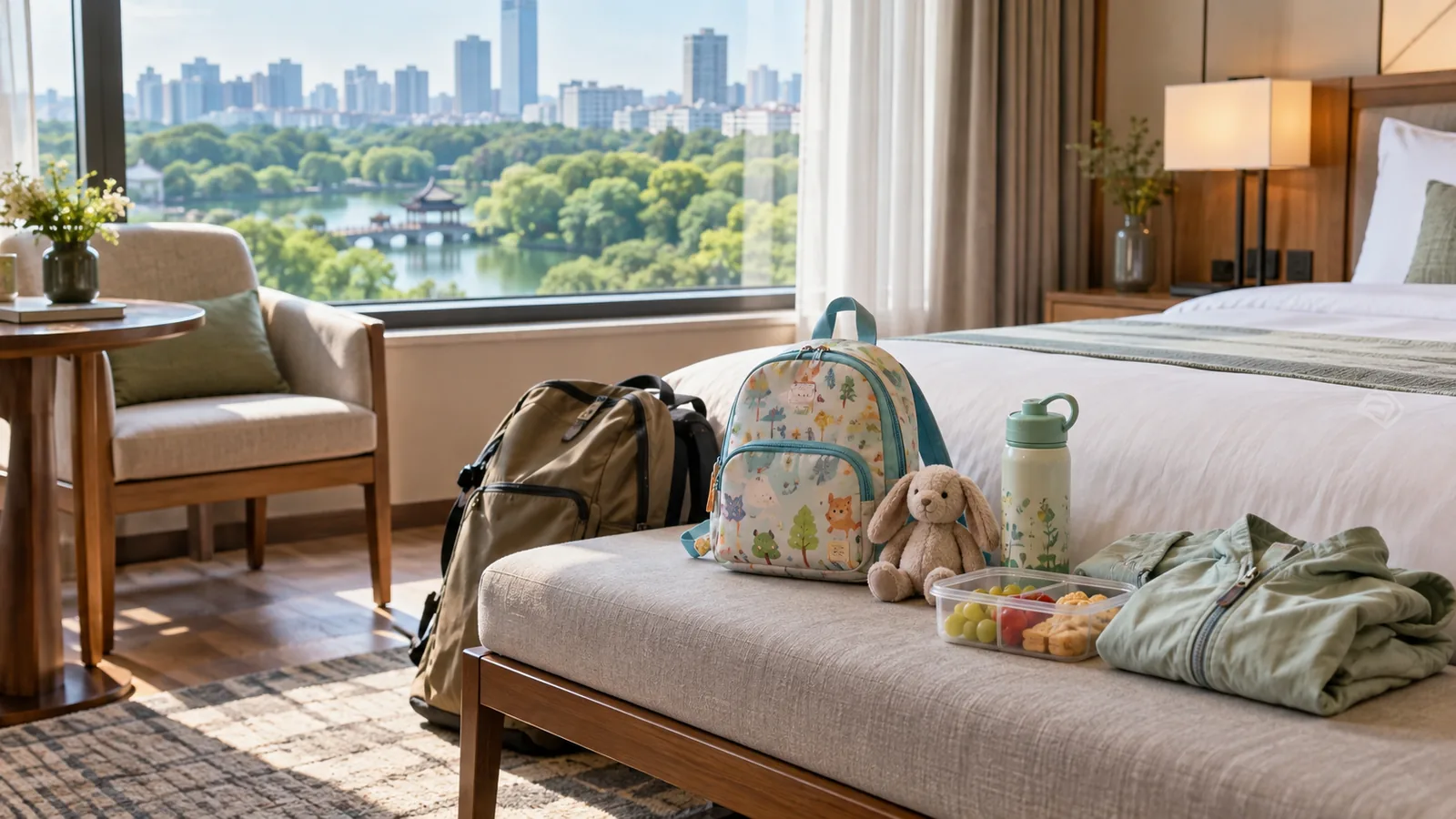
Prepare one small day bag for predictable friction
Carry only what reliably protects the day. Too much equipment creates its own burden, especially in stations and on stairs.
WaterFamiliar snackLight layerTissuesPower bankEssential medicationHotel address in ChineseOffline document copies
Keep passports and critical medication with the responsible adult, not in a child’s backpack. Follow the medication, battery and baggage requirements of your airline and transport operator.
Make stations easier by removing choices in advance
On intercity days, identify the exact station, departure time and onward plan before leaving the hotel. Chinese cities can have multiple large railway stations, and the city name alone is not enough. Arrive with time for security and passport checks, keep the party together and give one adult responsibility for documents while the other manages luggage and the child.
Do not schedule a major attraction immediately after arrival. The train may be punctual while the total hotel-to-hotel transfer still takes most of the day.
Plan food with a fallback ladder
Family dining does not need to mean searching only for familiar Western chains. It means having an escalation path. Start with the restaurant you want, keep a second option in the same area and know the simplest food available near the hotel. Save dietary requirements in clear Chinese text and show them before ordering rather than relying on an improvised translation at the table.
Restaurant staff can explain ingredients, but families managing a serious allergy should use advice from their clinician and make conservative choices. A travel guide cannot guarantee a kitchen is free from cross-contact.
Use the planner and guide for different jobs
The free trisAino Planner is for the route: cities, days, interests and an editable day-by-day structure. Enter a slower pace, limit hotel changes and protect a reset after major transfers. The trisAino Guide is for readiness: documents, payments, connectivity, transport and other tasks that are easier to solve before departure.
For a wider overview, read the existing practical China guide for parents traveling with children. This article adds the daily operating rhythm: one anchor, one reset and one backup at a time.
Know what human support can and cannot do
trisAino Concierge offers real human help through WhatsApp or WeChat during published service hours. It can assist with supported restaurant requests, translation, ticket options and changes, but availability, platform rules and third-party decisions still control the result. A booking cannot be guaranteed, and Concierge is not an emergency service.
Build the family version, not the adult route with smaller tickets
Use fewer bases, one anchor activity per day and a realistic return path to the hotel.
Start a family itineraryHow many cities should a family visit in ten days?
Two or three bases is a sensible starting range. The child’s age, trip history and transfer length matter more than the number itself, but every extra base adds a full transition cycle.
Should families return to the hotel every afternoon?
Not necessarily. Younger children and intense morning plans benefit most. The important part is keeping the option geographically realistic rather than placing the hotel far from the day’s activities.
Is China’s high-speed rail practical with children?
It can be very practical when the exact station, boarding buffer, luggage plan and onward transfer are prepared. Treat the entire hotel-to-hotel move as the day’s main commitment.
What should parents prepare offline?
Keep passport and booking copies, the hotel name and address in Chinese, essential medical information, insurance contacts and the next transfer details available without a connection.
Product and service information was checked on 21 September 2026. Families should confirm current transport, venue, hotel, airline and health requirements with the responsible provider before travel.