Chinese Number Gestures: How to Show 1–10 with One Hand
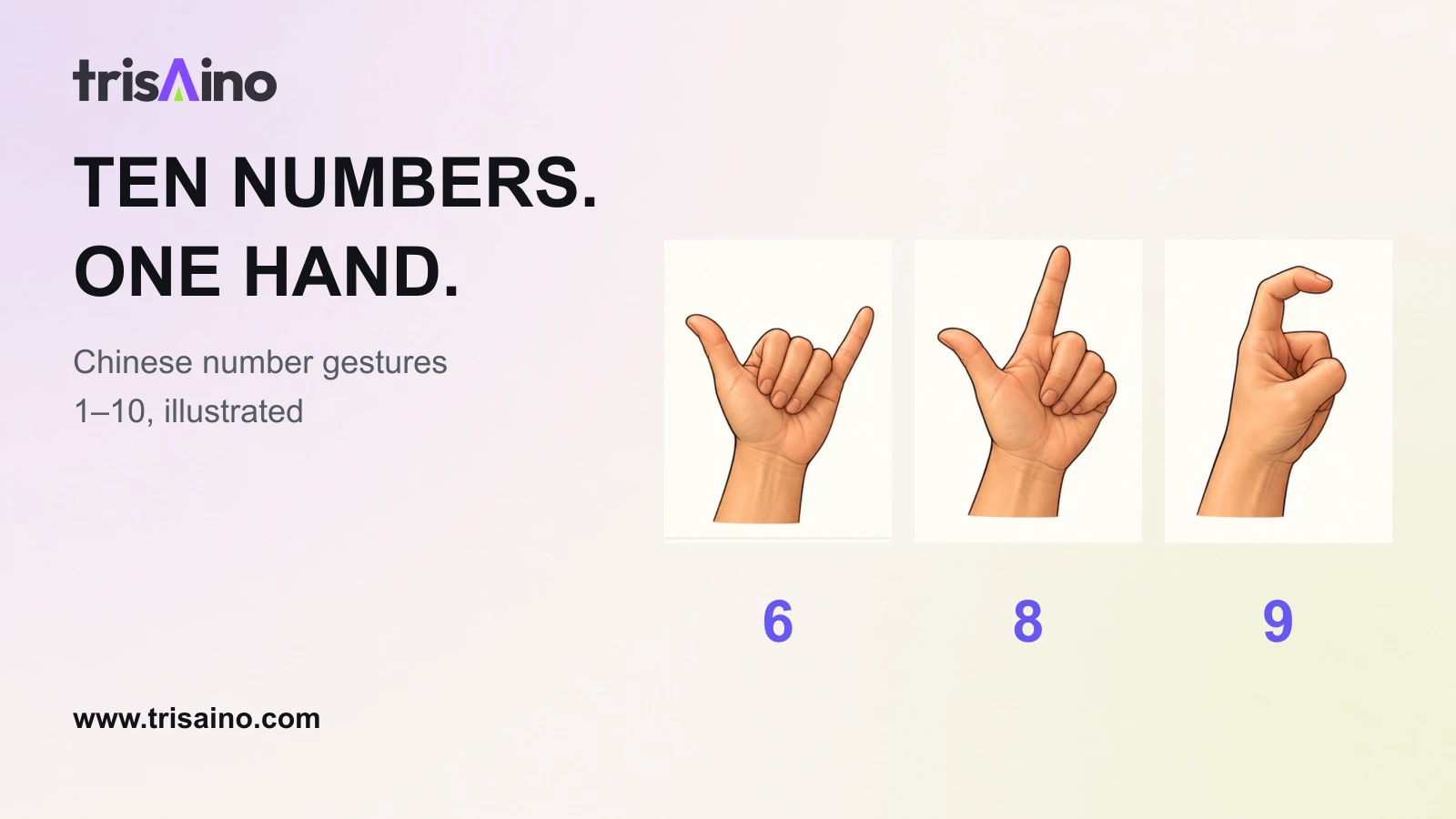
Eleven hand pictures, ten numbers—and a small skill you can try before your China trip.
Can you show 1–10 with one hand in China? Yes. A common set of everyday number gestures uses familiar finger counts for 1–5 and distinct shapes for 6–10. This illustrated demonstration includes two ways of showing 3. Treat it as a useful starting point, not a guarantee that every person uses identical gestures. For prices, confirm the complete amount on a screen or in writing.
A restaurant host asks how many people are in your group. You answer, but the room is noisy. Holding up a number can help the conversation along—provided you and the other person mean the same thing.
The interesting part starts after five. Instead of bringing in a second hand, this set uses a different shape for each number. Try making the poses slowly as you look through the pictures. Understanding a gesture matters more than making your hand look exactly like the illustration.
First, meet the whole set
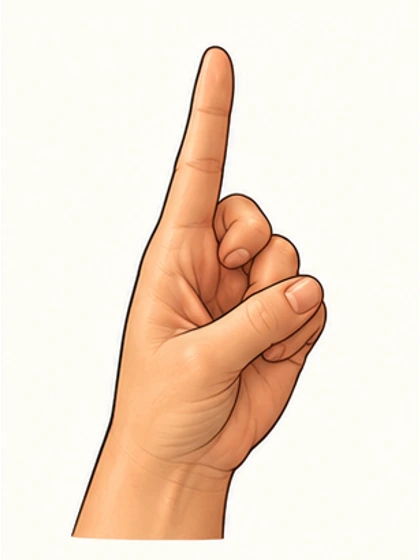
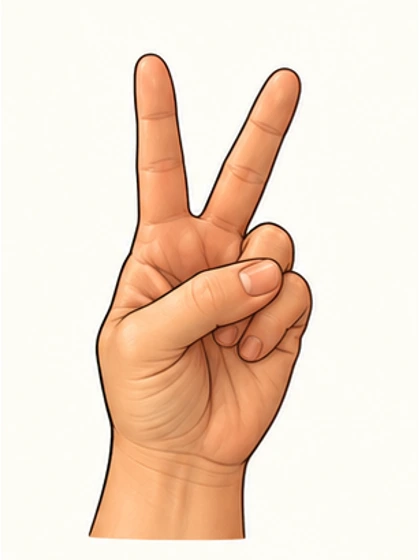
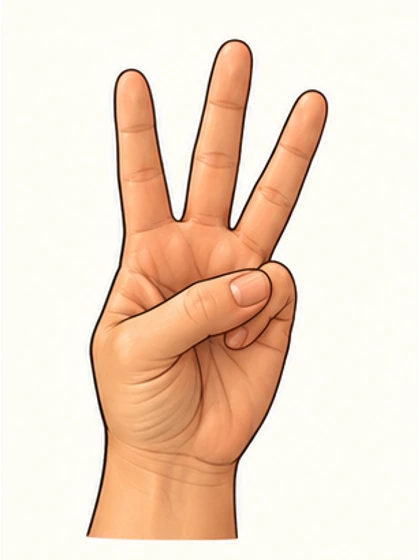
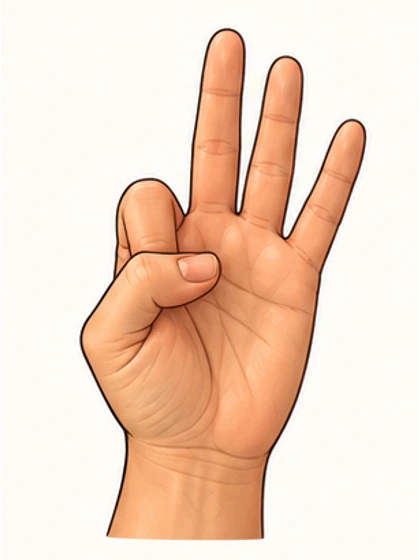
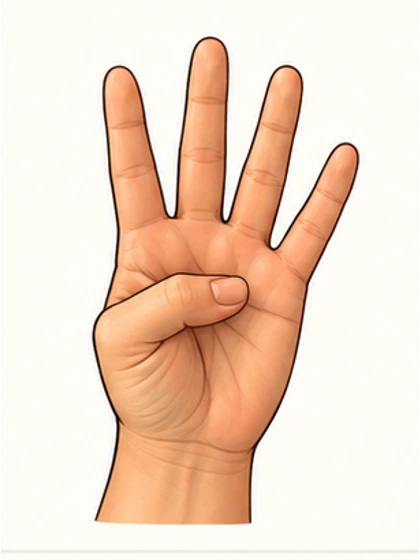
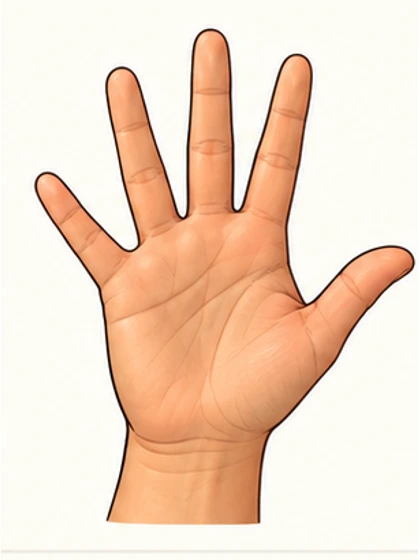
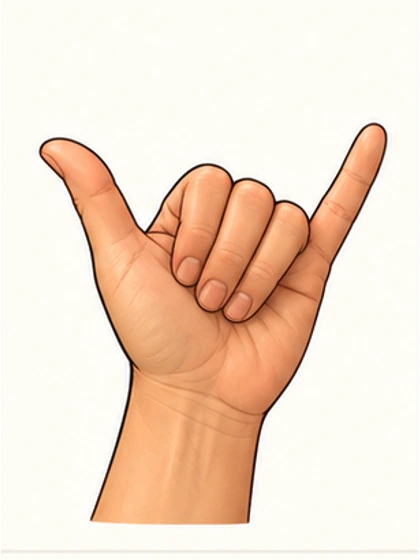
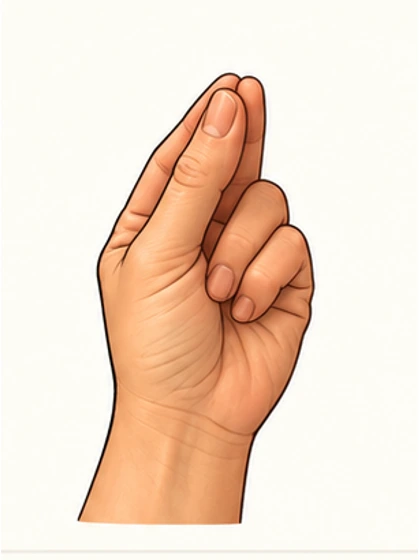
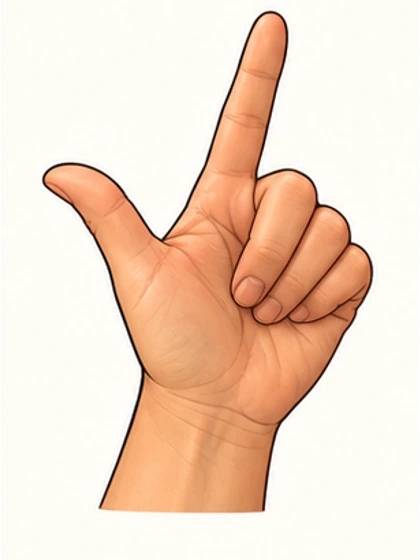
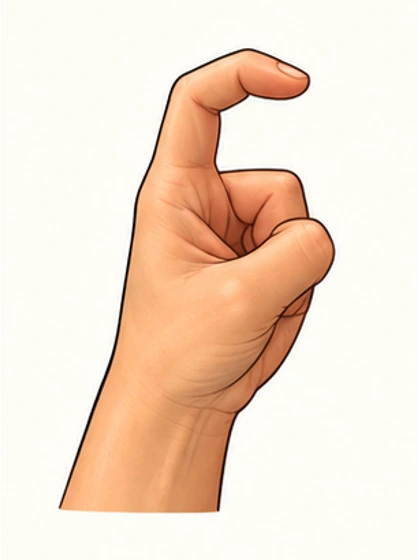
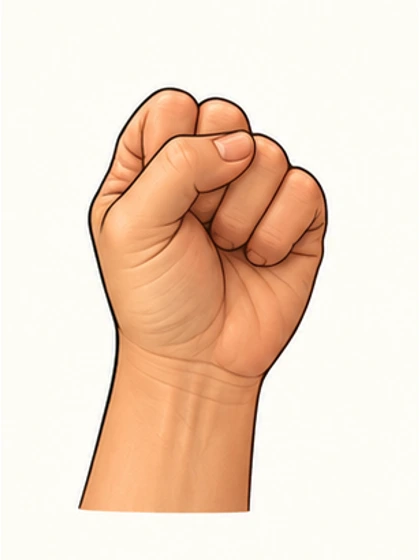
The illustrations were created from hand demonstrations supplied for this article, including both versions of 3. They are not photographs or frames from an official sign-language course.
The Open University’s beginner Chinese course also teaches one-handed number gestures, including several ways to express 10. Its examples support the general practice, while our pictures follow the contributor’s specific demonstration. OpenLearn: basic numbers and hand gestures
Numbers 1–5: start by counting the raised fingers
For 1, raise the index finger. For 2, raise the index and middle fingers. The two versions of 3 deserve a closer look:
- 3, version A: raise the index, middle and ring fingers; keep the little finger folded under the thumb.
- 3, version B: raise the middle, ring and little fingers; keep the index finger folded under the thumb.
Both are shown because our contributor uses both—not because one is the correct version and the other is a mistake. Notice which finger folds down; do not accidentally copy a different three-finger combination.
For 4, extend the four fingers and fold the thumb across the palm. For 5, open the whole hand.
There is no need to force a stiff or uncomfortable finger position. If a pose is awkward, show the written number instead.
Numbers 6–10: learn the shapes, not just the finger count
These descriptions refer to the demonstrated set above:
- 6: extend the thumb and little finger, keeping the three middle fingers folded.
- 7: bring the thumb, index and middle fingertips together; fold the other two fingers.
- 8: extend the thumb and index finger, leaving the remaining fingers folded.
- 9: curl the index finger into a hook, keeping the other fingers folded.
- 10: close the hand into a fist.
The fist is not an unambiguous “ten” in every interaction. OpenLearn also describes it as ten or zero and shows crossed-finger alternatives for ten. Context still matters. This page teaches the version in our demonstration rather than claiming there is one compulsory national system.
Nor should you assume a familiar-looking gesture means the same thing everywhere in the world. Here, you are learning its use within a number conversation.
Three useful ways to try it
Confirm how many people
At a restaurant entrance, say your party size and use a gesture as a second clue. A gesture showing three is useful only if the other person knows you are discussing people, not a table number or a quantity of food.
For the rest of the process, see our restaurant queue article. Hand gestures do not replace getting a queue ticket or checking whether your number has been called.
Confirm a quantity
Point to the item or menu entry, then indicate the quantity. Check that you are discussing the same unit: three individual pieces and three portions may be very different orders.
This is an example of how you might use the skill, not a promise that every seller will respond with the same gestures.
Recognize a number, then verify the price
If someone makes the gesture shown here for eight, do not immediately assume the total is ¥8. You still need to establish the amount, the unit and whether it is a per-item or total price.
Ask the person to type the full amount into a calculator or show it on the bill. Read it before you agree or pay. Gestures are an extra communication channel, not a substitute for a clear price.
If you do not understand, ask for a written number
You do not have to master these gestures to travel in China. They are a useful little addition, not an entry test.
You can show this sentence on your phone:
Could you type the number on the phone, please?
请在手机上输入数字,好吗?
If you are discussing money, ask to see the total as well. A friendly clarification is more useful than confidently guessing a gesture you only half remember.
Is this Chinese Sign Language?
No—this article is about everyday number gestures used as conversational shorthand. It is not a lesson in formal Chinese Sign Language, and the two should not be treated as interchangeable.
Save the chart if it helps. Try six, seven, eight and nine at home, then use the gestures alongside words, pointing or written numbers. The goal is not a perfect performance. It is one more way to understand each other.
Prepared September 15, 2026. Illustration poses follow contributor-supplied photographs; both versions of 3 are retained. General teaching reference: Open University OpenLearn. The drawings are AI-assisted interpretations checked against the photographs, not a nationwide standard or formal sign-language certification. Confirm ambiguous numbers in writing.