
CHINA TRAVEL · trisAino
Curious about rural Shanghai? These routes sketch a different cultural map
Shanghai’s countryside is not presented as one simple escape. Across the city’s rural routes, you find factory-to-art reuse, tea in old houses, temple history, village crafts, flower fields, archaeology and even a giant radio telescope.
what if Shanghai gets quieter, not smaller
If your picture of Shanghai starts with transport hubs feeding into museums, riverside landmarks, shopping areas, theme parks, historic streets and cultural venues, that is a real part of the city’s official travel framing. One set of routes is built exactly around arriving visitors and the places they can head to across the city.
But Shanghai also presents a different map: 18 rural routes across rolling fields, quiet villages and scenic landscapes. That matters because the countryside here is not treated as empty space between urban highlights. It is introduced as a place to explore in its own right.
some villages read like small cultural notebooks
Qizao village gives one of the clearest examples. Its route links a tourist service center, an art museum, a teahouse, a community stop, a courtyard and a resort. The summary says the route brings together art, food, leisure and accommodation, including an art space transformed from a factory and tea in a centuries-old house.
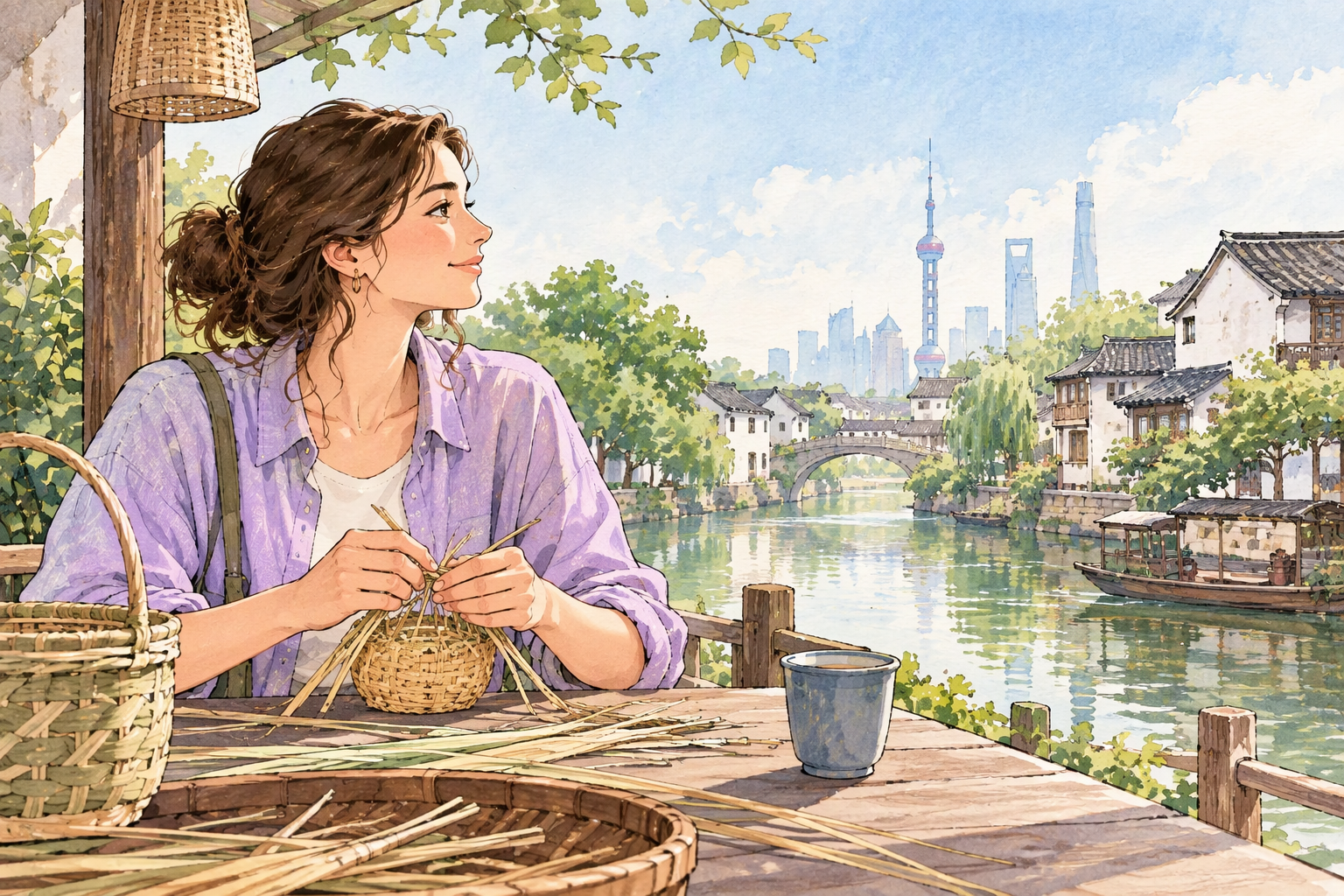
In Jiading, one route combines traditional rural crafts, seasonal fruit picking, Huizhou-style architecture and the natural setting of Jiabei Country Park. Another Jiading route leans into strawberries, traditional farming, flowers, fruit and time with animals. Together, they suggest that rural culture here can mean built form and craft just as much as open-air scenery.
Baoshan pushes the picture further into history. One route connects villages with Baoshan Temple, Luodian Ancient Town and Yuanjing village, and its description ties the journey to the history of a Ming Dynasty general, an ancient water town, a thousand-year-old Buddhist temple, rice fields and folk paintings. That is a broad cultural mix for a rural outing.
the countryside can also turn unexpectedly inventive
Not every route leans on temples or old houses. One route built around The Global Floraland, Jing Mo Blooms Art Studio and Auspicious Rice is described as combining the flower industry, cultural heritage and rice culture. Along the way are flower fields, pressed-flower crafts and rice-based culinary traditions, which makes the countryside feel curated as well as agricultural.
and sometimes it looks straight at the past and the sky
One Songjiang route heads to Tianma Xingkong village, described as home to one of Asia’s largest fully steerable radio telescopes. The route is framed as an astronomical and scientific adventure in Songjiang’s countryside, a detail that gives rural Shanghai an unexpectedly future-facing edge.
Another route starts from Fuquanshan Archaeological Site, often called “Shanghai’s pyramid” for its archaeological wonders, then continues through forest, cherry picking, nature classes and farming activities. Set beside the astronomy route, it shows how easily Shanghai’s rural map can move between excavation, landscape and science.
a simple way to choose your version of rural Shanghai
Start with the cultural mood you want. Qizao suits an art-and-old-house picture, Baoshan leans toward temple history and folk imagery, and the Songjiang or Fuquanshan routes fit better if you like your countryside with a scientific or archaeological twist.