
CHINA TRAVEL · trisAino
A former shelter turned museum: Shanghai's quiet story of public welfare
Tucked inside a Huangpu district park that once housed the city's largest charitable shelter, the Museum of Shanghai Civil Affairs traces marriage customs, social assistance and community life through more than 5,000 artifacts.

A park with several past lives
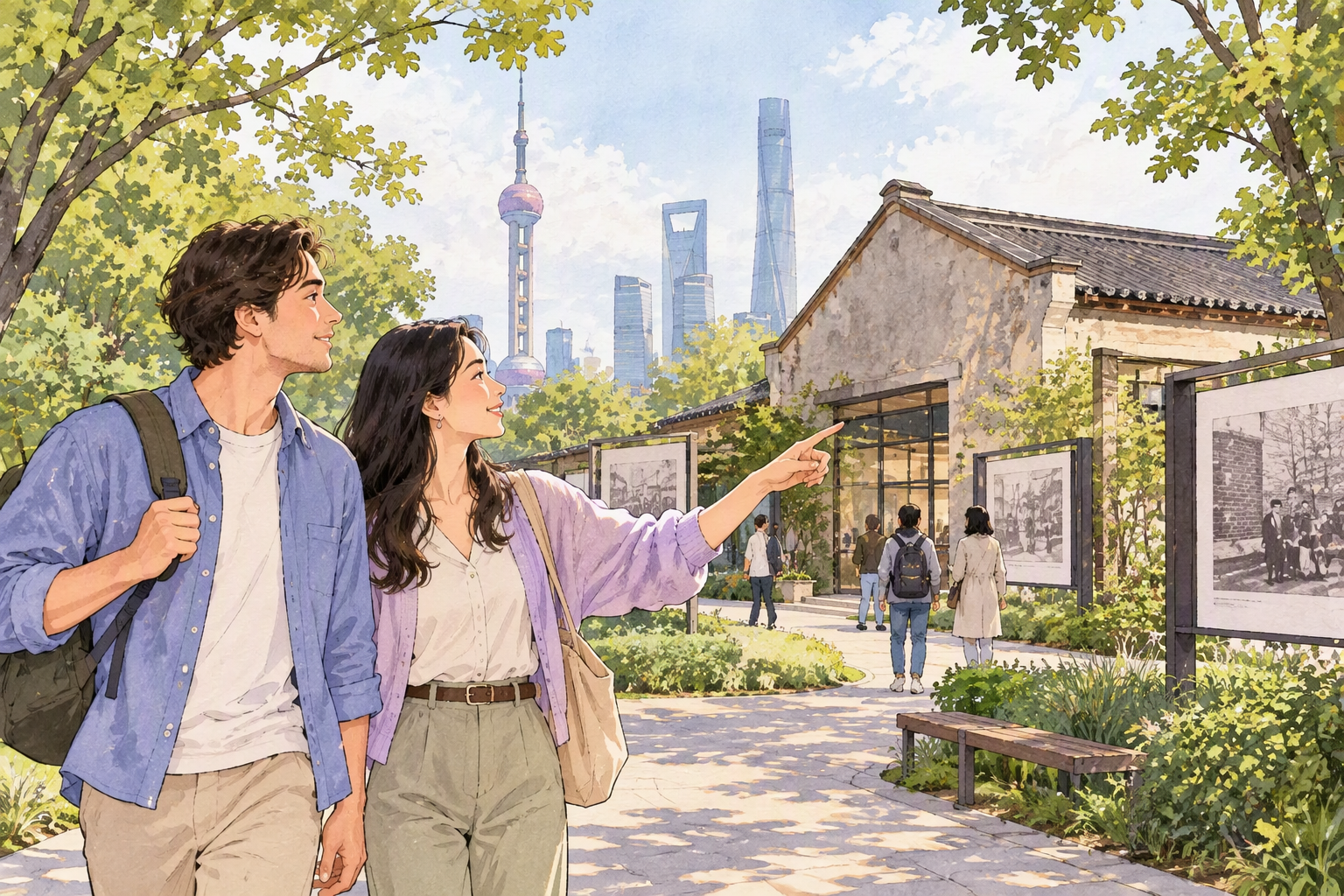
Wander into Gongyi Xintiandi Park in Huangpu district and you're standing on ground that has quietly reinvented itself for over a century. The site was once home to Xin Puyutang, the largest charitable shelter in Shanghai during the Republic of China period. After that it housed a municipal nursing home, a childcare center and eventually the Shanghai Children's Home — each chapter layering another kind of care onto the same patch of city.
Today the park is home to the Museum of Shanghai Civil Affairs, described as China's first comprehensive museum dedicated to the civil affairs sector. It's a small, focused place — the kind you might walk past on your way to busier landmarks — but it tells a story most Shanghai museums don't attempt.
Twelve galleries, one thread
Inside, the museum spreads across twelve themed galleries covering social assistance, elderly care, charitable services, marriage customs and community governance. The collection holds more than 5,000 artifacts and historical documents, together offering a sweeping view of how Shanghai's civil affairs and social services have evolved over time.
The range is wide, but the galleries share a common question: how does a city organize itself to look after its people? You move from Republic-era paperwork to modern community governance, and the shift in scale and ambition becomes visible in the objects themselves.

Objects that stop you mid-step
Vintage marriage certificates and tax stamps from the Republic of China era sit behind glass, offering a glimpse into the legal frameworks that once governed personal life. Nearby, early welfare lottery tickets and spinning lottery machines trace the history of charitable initiatives — a surprisingly tactile corner of the collection.
In a lighter register, an interactive AI experience lets visitors try on virtual wedding attire — a playful contrast to the historical documents a few rooms away.
Why these things sit together
Marriage registration, charitable lotteries, elderly care, children's welfare — at first glance the subjects feel scattered. But they all fall under the umbrella of civil affairs, the branch of government that handles the everyday social fabric. Seeing them gathered in one place, on a site that itself cycled through shelter, nursing home and children's home, gives the collection a coherence that a larger museum might struggle to achieve.
If you're drawn to the human side of a city's history — the paperwork, the safety nets, the small ceremonies — this museum rewards a slow visit.
Where and when
The museum is at Buildings 1 and 2, Gongyi Xintiandi, No 105 West Puyu Road, Huangpu district. It is open 9 am to 4 pm, with last entry at 3:30 pm, and closed on Mondays except public holidays.