
CHINA TRAVEL · trisAino
Shanghai Qingpu Museum: ancient objects and river life
Explore Qingpu’s past through ancient jade and pottery, then turn to Qinglong’s economy and the bridges and boats of its waterways.
A butterfly shape in Songze Square
If you are choosing a Shanghai museum outing with a local focus, start by looking at the building. Shanghai Qingpu Museum stands in Songze Square in Qingpu district. Its five interlocking, oval-shaped roofs have been likened to a butterfly in flight. Architect Xing Tonghe’s design is intended to evoke Qingpu’s modern transformation.
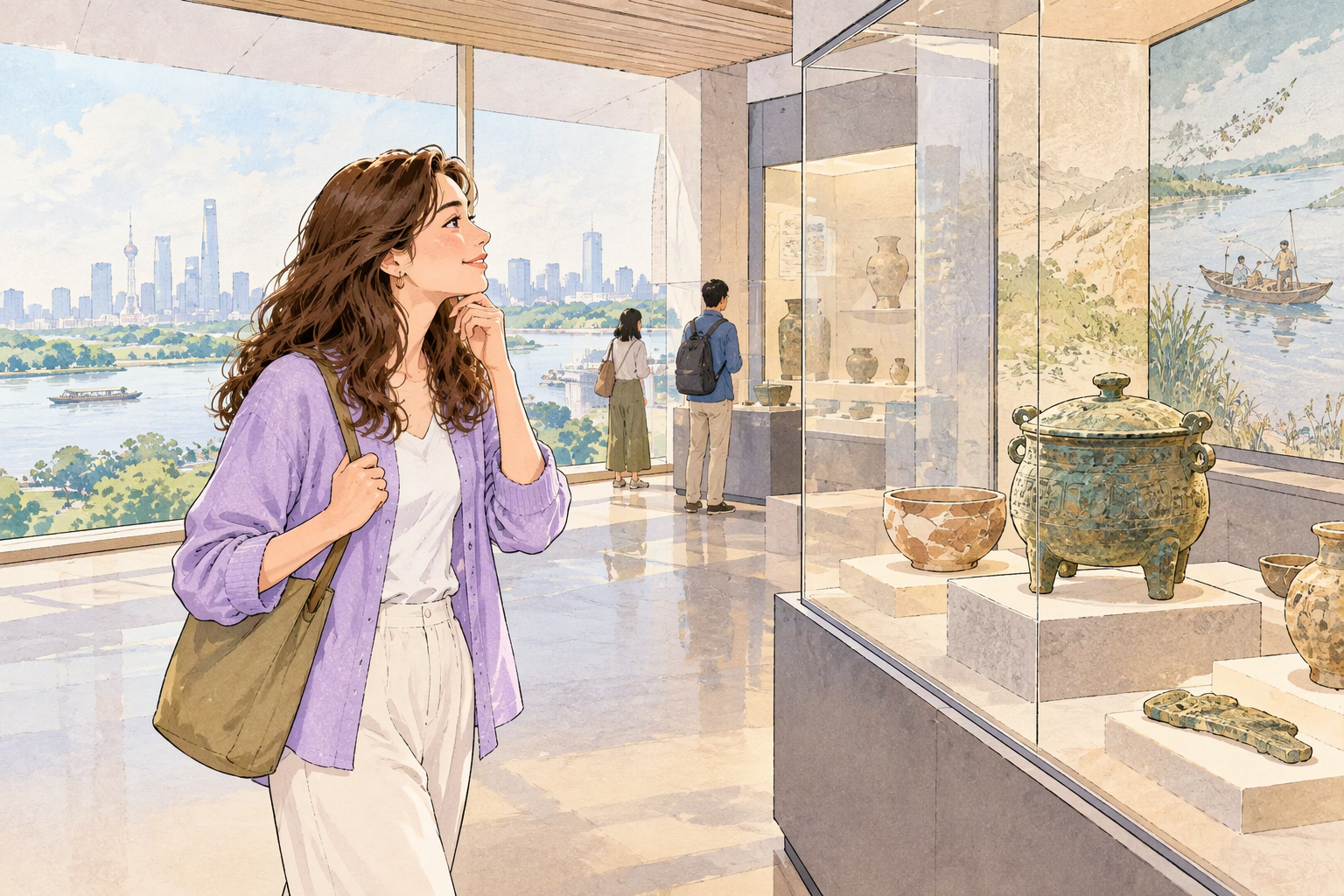
Inside, the Ancient Culture Exhibition Hall reaches back to Shanghai’s origins around 6,000 years ago. It gives you a different starting point from the city’s more familiar modern image: objects left by people who lived in this area long before the Shanghai you might have come to explore.
Look closely at the ancient objects
Jade, pottery and stone artifacts in the Ancient Culture Exhibition Hall are arranged by era, making changes in techniques and styles part of the visit. The exhibits occupy two floors. Rather than choosing only one striking piece, you can follow the sequence and see how different materials were worked over time.
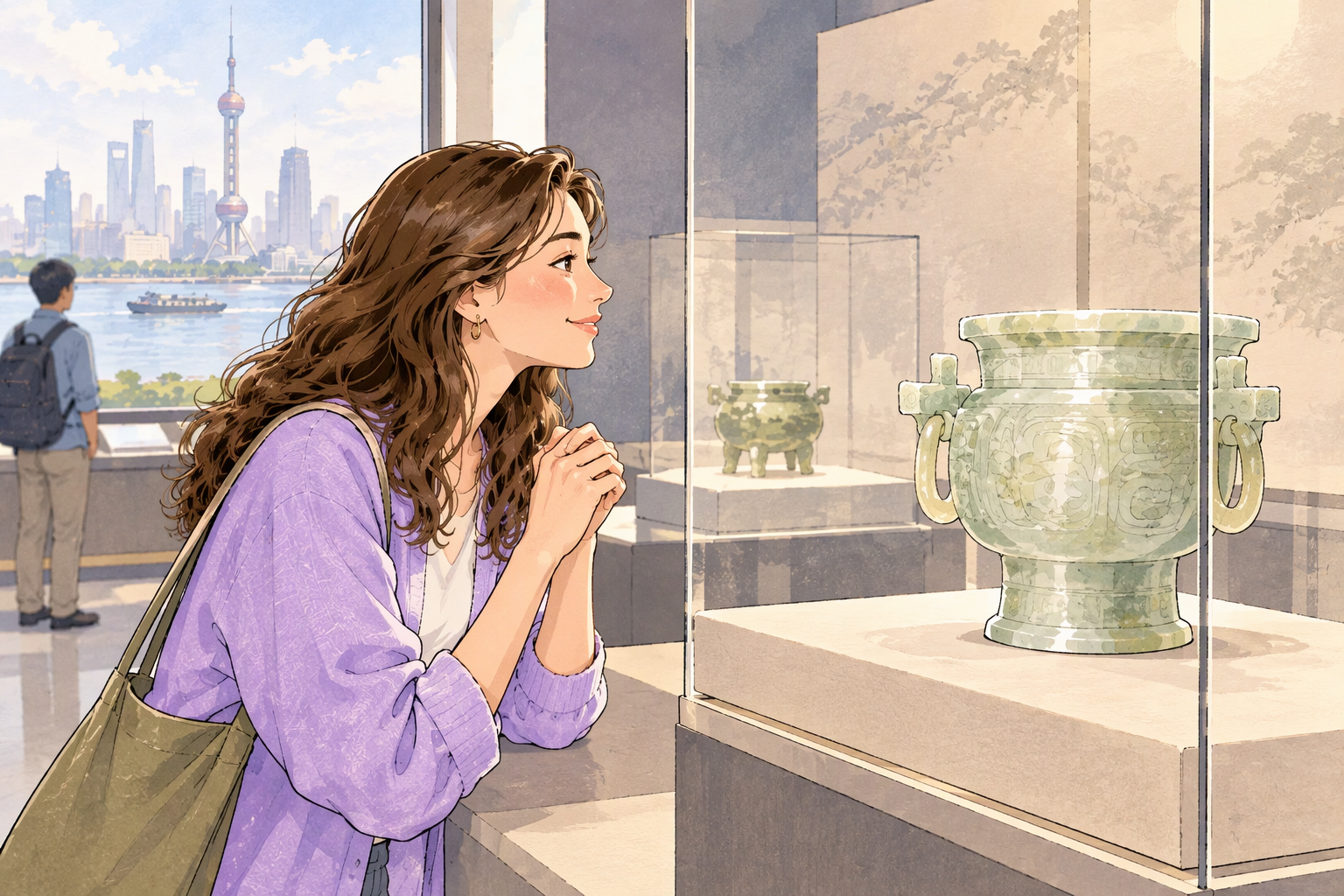
On the first floor, a well-preserved skull unearthed from a tomb at the Songze Site is a highlight associated with the study of ancient settlers. Upstairs, the focus turns mainly to Fuquanshan, a man-made mound. Jade sacrificial vessels found there bear symbols and patterns whose meanings invite a closer look.
From Qinglong’s economy to boats and bridges
The River Culture Exhibition Hall shifts the focus to Qingpu’s waterways and Qinglong town. During the Song Dynasty, Qinglong generated more tax revenue than other towns around Taihu Lake. Relics on the hall’s first floor explore the town’s prosperity, adding an economic dimension to the river landscape.
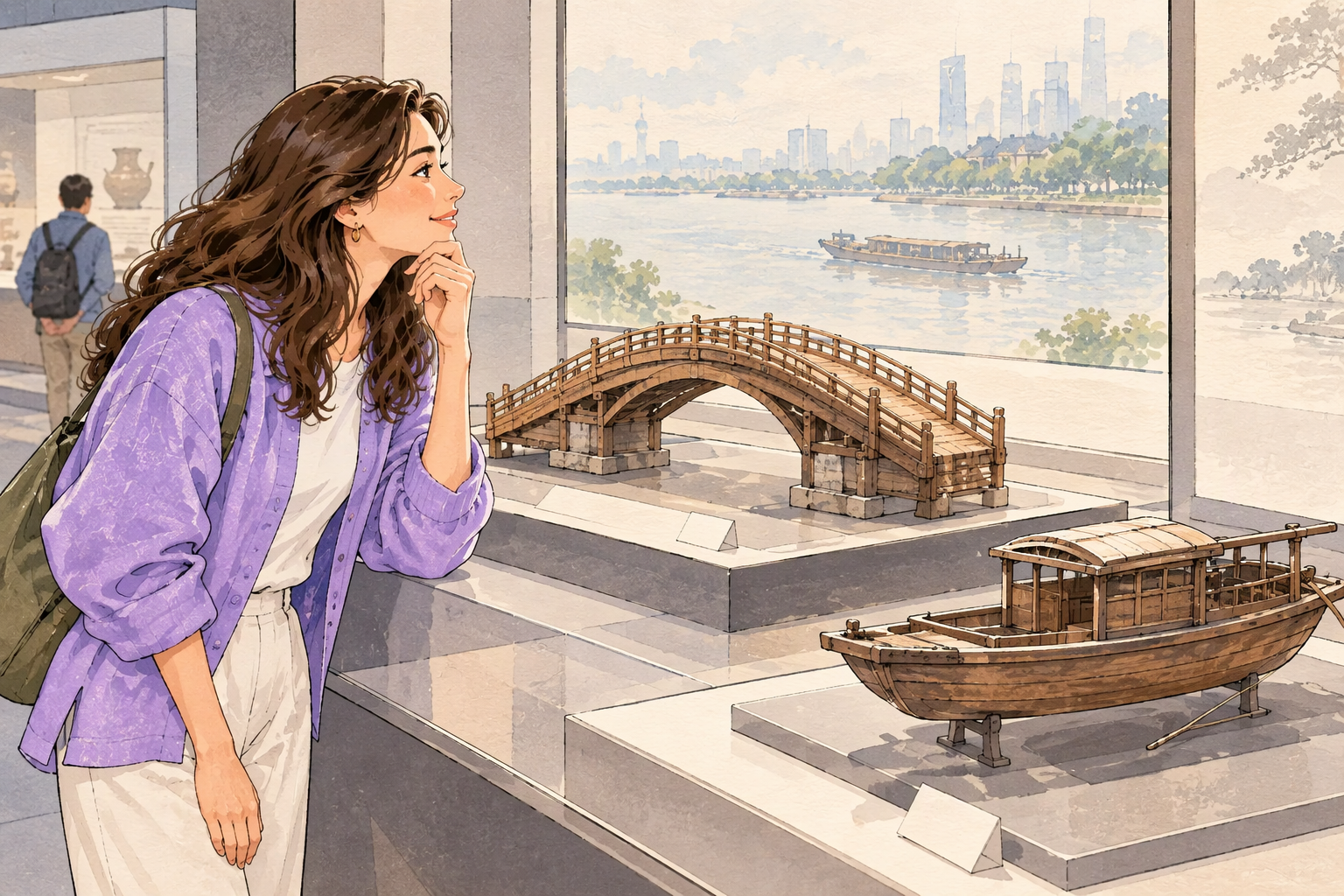
On the second floor, you can turn from that wider history to bridges, boats and gardens. Models of bridges and boats offer something more particular to examine: the structures and vessels associated with life around Qingpu’s rivers. It is a change of scale from the ancient hall’s jade and pottery, but still a way to understand the district through things people made.
Before you set out
Shanghai Qingpu Museum is listed at No 1000 South Huaqing Road in Qingpu district.
Confirm current visiting arrangements with the museum before making the trip, particularly if your plans depend on a specific time.