KFC and McDonald’s in China: Familiar Logos, Different Daily Routines
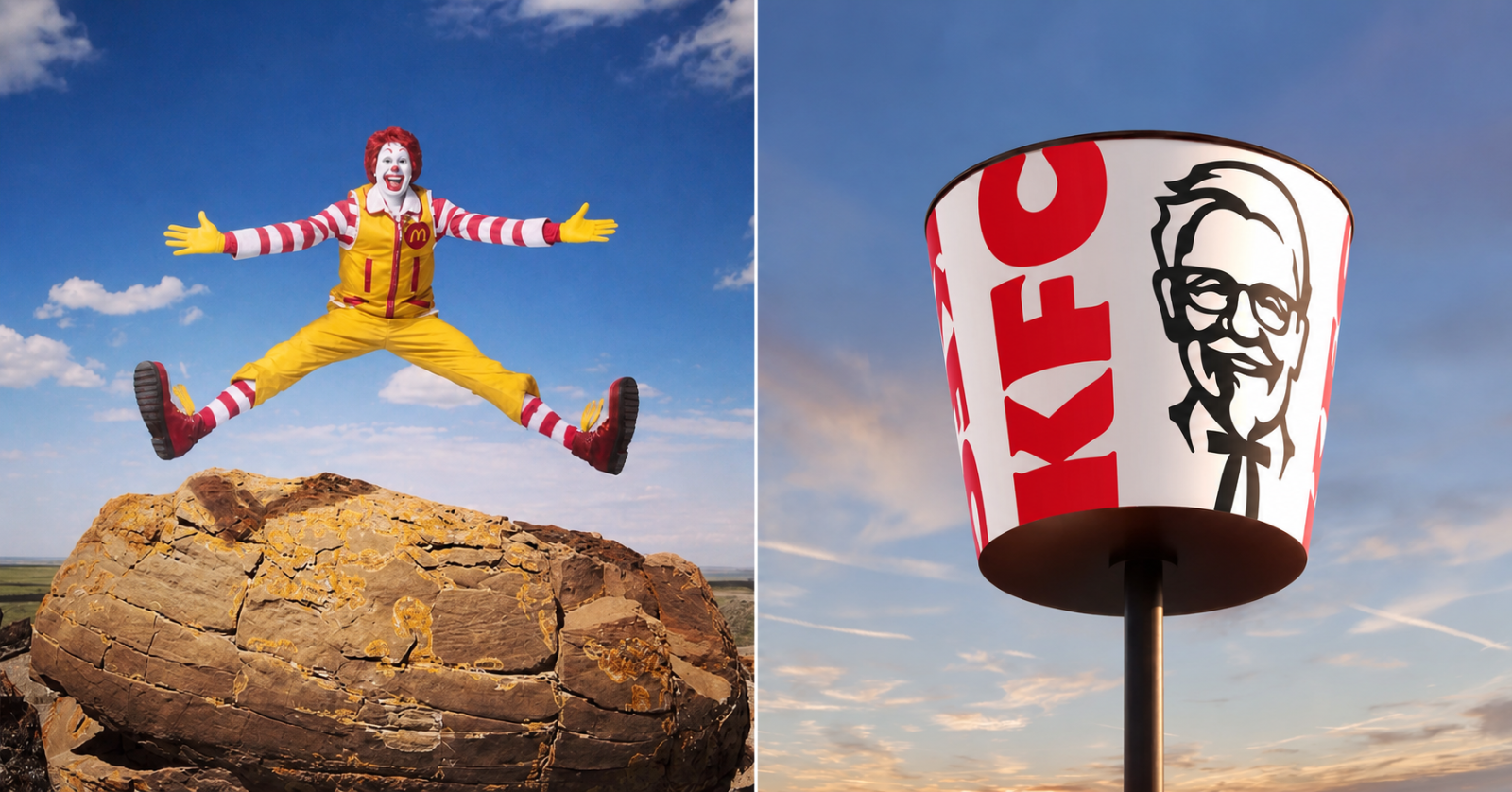
Quick answer: KFC and McDonald’s in China still serve internationally recognizable favorites, but they also work as Chinese breakfast stops, quick lunch counters, coffee runs and highly digital local brands. Expect a mix of global classics, China-developed staples and fast-moving limited releases. The exact menu, price and ordering options depend on the restaurant, city, time of day and current campaign.
You are tired, hungry and not in the mood for a culinary adventure.
Then you see the Colonel. Or the Golden Arches.
For a traveler, that familiar logo can feel like a small promise: at least you already know how this works.
In China, you partly do.
The fries still look like fries. A Big Mac is still a Big Mac. KFC still sells fried chicken. But arrive at breakfast and you may find congee, soy milk and youtiao—Chinese fried dough sticks—sharing a menu with McMuffins. Open KFC’s menu and the brand may look less like a fried-chicken specialist than an all-day quick-service restaurant, with rice dishes, porridge, coffee, tea and custard tarts beside its international signatures.
That difference is more interesting than a list of “strange foods at familiar chains.” It shows what happens when a global restaurant spends decades becoming part of a local routine.
What is actually different?
| What you may recognize | What changes in China |
|---|---|
| Big Mac, fries, McMuffin | Congee, youtiao, soy milk and China-developed chicken products may share the menu |
| KFC fried chicken and burgers | Breakfast, rice dishes, porridge, egg tarts, coffee and tea broaden the day beyond a chicken bucket |
| Counter ordering | Kiosks, apps, QR menus and mini-programs often become part of the transaction |
| A stable national menu | City, branch, daypart and limited campaign can all change what is available |
| A printed price | Member offers, channel-specific coupons and delivery pricing may produce a different checkout total |
This is not a direct comparison with one universal “foreign menu.” KFC and McDonald’s already vary by country. The useful question is narrower: what may surprise an international visitor at a branch in mainland China today?
The clearest difference arrives at breakfast
Breakfast is the best place to begin.
McDonald’s China’s official breakfast menu currently lists familiar items such as Sausage McMuffins and hash browns alongside:
- Century egg and chicken congee — 皮蛋鸡肉粥
- Chicken congee with preserved vegetables and bamboo shoots — 雪菜脆笋鸡肉粥
- Youtiao — 脆香油条
- Soy milk — 优品豆浆
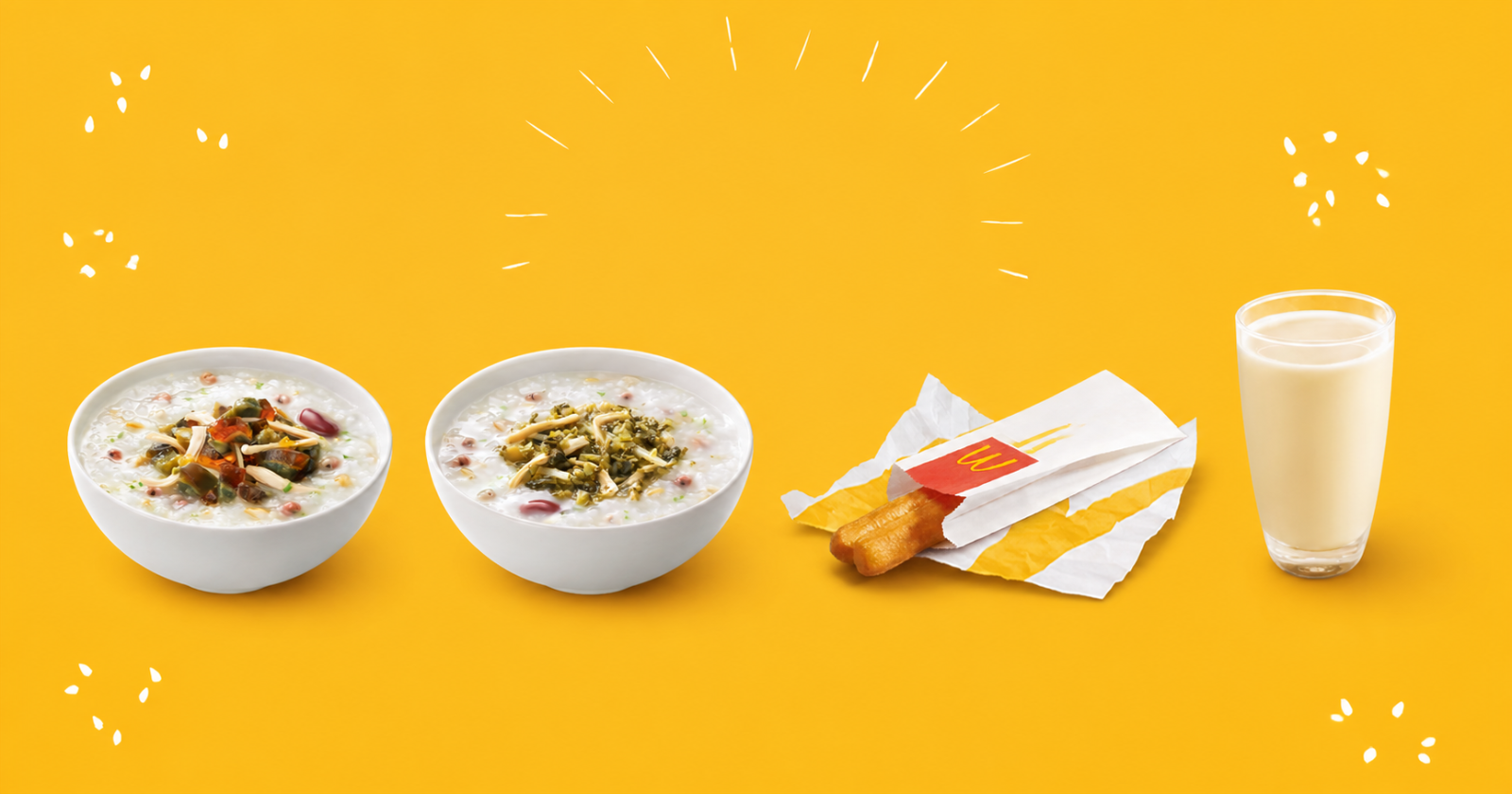
From left: century egg and chicken congee (皮蛋鸡肉粥); chicken congee with preserved vegetables and bamboo shoots (雪菜脆笋鸡肉粥); youtiao (脆香油条); and soy milk (优品豆浆). Availability varies by restaurant and time of day.
This is not a separate “Chinese experience” staged for tourists. It is simply breakfast.
KFC has followed this daily rhythm extensively. Yum China describes Chinese breakfast localization as a long-running part of the brand’s menu development, with historical examples including congee, pancakes, rice rolls and tofu pudding.
This matters because breakfast in China is not one national plate. It changes by region, schedule and personal habit. One commuter wants a portable wrap and coffee. Another wants something hot and soft from a bowl. Someone else wants soy milk and fried dough.
The chains adapt by offering several of those breakfast languages at once.
For an international visitor, that can make them useful on a practical level. If you are not ready to navigate a busy neighborhood breakfast stall on your first morning, a chain can offer a lower-friction introduction to dishes you will see elsewhere.
It should not replace the local stall. But it may make the stall feel less unfamiliar tomorrow.
Timing note: Do not assume one breakfast cutoff applies at every restaurant. Hours, participating products and occasional all-day-breakfast promotions are restaurant- and campaign-specific. Check the live menu for the selected location.
Congee is not there to be “unexpected”
Online comparisons often frame Chinese fast-food menus as a parade of surprises: “KFC sells rice!” “McDonald’s has porridge!”
That is fun for a thumbnail. It is less useful for understanding why the food is there.
Rice and congee make these restaurants work for more eating occasions. A rice dish can be lunch rather than a snack. A bowl of hot porridge can be breakfast for someone who does not want bread. Soy milk fits a familiar morning habit. A grilled or spicy chicken burger can become a local bestseller even when beef burgers remain part of the global identity.
Yum China’s current brand description presents KFC’s menu in China as broader than chicken alone, including rice dishes, congees, vegetables, desserts, coffee and tea.
McDonald’s takes a somewhat different approach. Its China brand page separates global signatures—including the Big Mac, Filet-O-Fish, McMuffin and fries—from local stars such as the McSpicy Chicken Filet Burger and Premium Grilled Chicken Sandwich.
Localization does not always mean placing a traditional dish under an American logo. Sometimes it means developing a new fast-food classic around local preferences—in this case, a strong appetite for chicken, spice and different textures.
And then there is the egg tart
KFC’s Portuguese-style egg tart occupies a special place in this story.
It is not Chinese breakfast in the same sense as congee or youtiao. Nor is it a standard KFC item around the world. It reaches the menu through Macao’s food culture and the wider popularity of flaky custard tarts in China.
Over time, it became one of KFC China’s recognizable signatures. Yum China has grouped the Portuguese Egg Tart with long-standing favorites such as Original Recipe Chicken and century egg and pork congee.
For a traveler, the useful point is not simply that a fried-chicken chain sells custard pastry. It is that a menu item can begin as an adaptation and eventually become part of how local customers remember the brand itself.
If you see the classic tart on the live menu for your selected restaurant, it is an easy first order. You may also encounter flavored tart promotions, but those can move quickly.
You may also come across KFC’s Gigantic Egg Tart—a playful, oversized version of the classic. It is not available at every location, but sometimes the sheer size of something makes it unexpectedly adorable. If you happen to spot one, it may be worth a try.
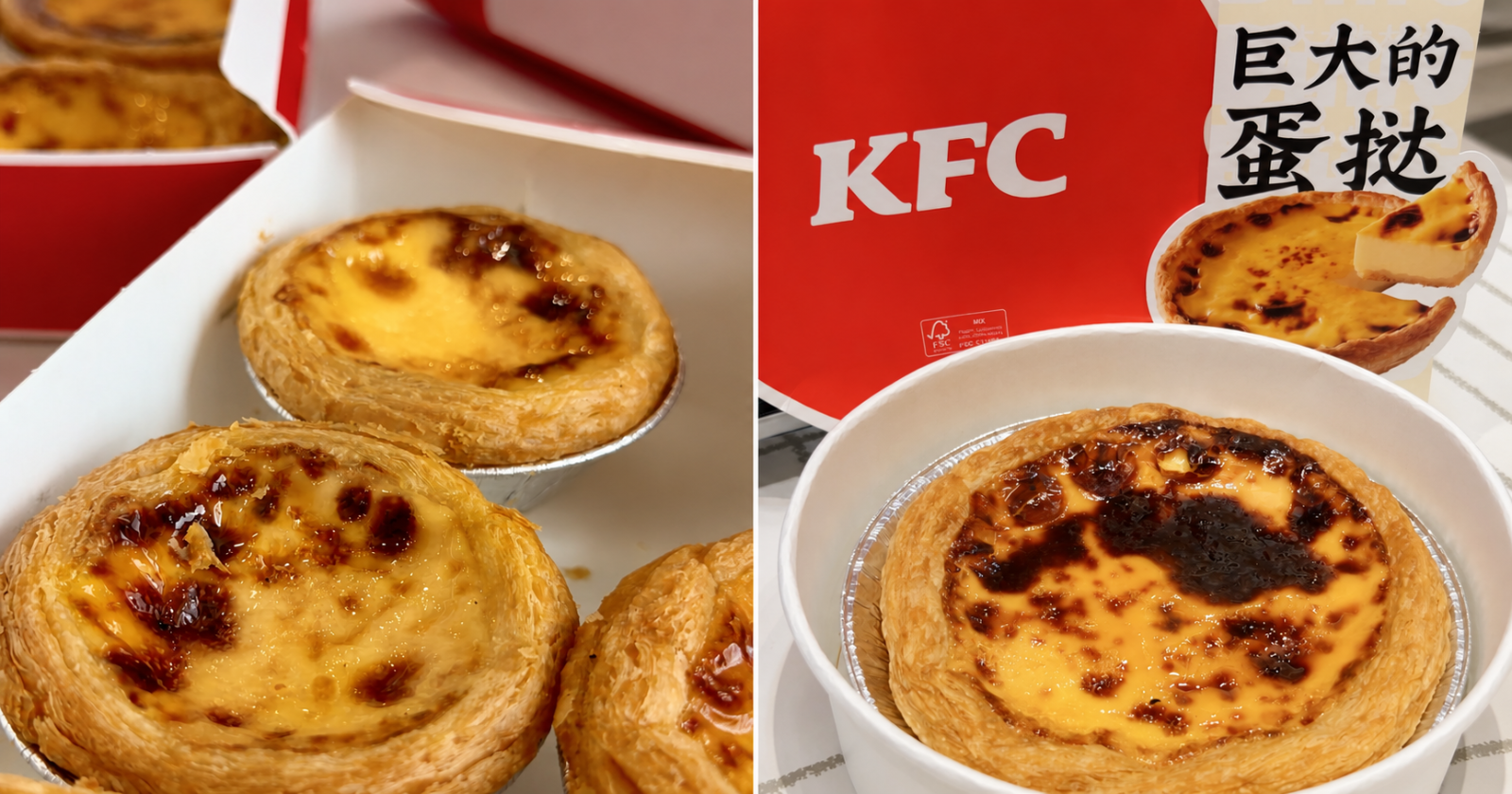
Left: KFC’s classic Portuguese-style egg tarts. Right: Gigantic Egg Tart (巨大蛋挞). Availability varies by restaurant and promotion.
Availability note: Do not assume every KFC sells every tart, rice dish or breakfast item at all times. The ordering screen for the selected restaurant is the most reliable current menu.
A city can change the menu
China is too large, and its regional food cultures too distinct, for localization to stop at “Chinese flavor.”
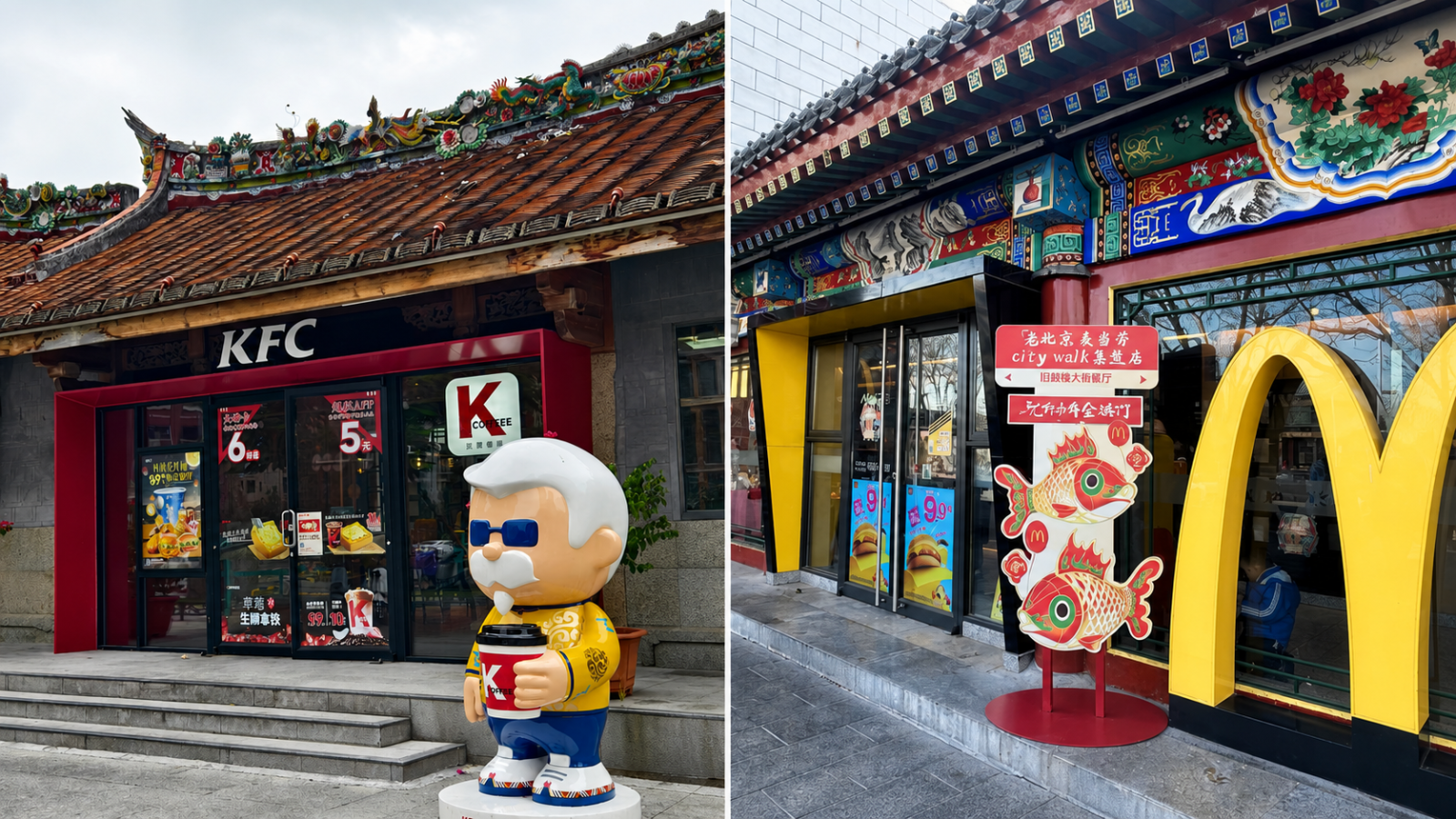
Global logos in local settings: KFC (left) and McDonald’s (right) storefronts in Beijing incorporate elements of traditional Chinese architecture. Storefront designs vary by location.
KFC has previously tested city- and region-specific food. In 2021, for example, it launched Wuhan reganmian—hot dry noodles—at more than 100 restaurants in Wuhan. It also introduced xiaolongbao in Hangzhou and nearby Yangtze River Delta markets, along with other regional dishes in different parts of China.
These examples are useful history, not a promise about today’s menu. Do not visit a current KFC expecting a 2021 limited release to still be there.
The larger lesson is that a global chain in China can behave like a regional menu laboratory. It watches what a city eats, translates some of those habits into a standardized restaurant system and then decides whether the result should remain local, travel nationally or disappear after a season.
McDonald’s products also vary by place. Its official promotions frequently specify participating cities and restaurants, and some special-location restaurants—such as those in airports, railway stations, service areas or tourist attractions—may be excluded.
That is why “I saw this online” is not enough information to order with confidence. You also need to know:
- Which city?
- Which restaurant?
- Breakfast or regular menu?
- Permanent item or limited campaign?
- Dine-in, pickup or delivery?
- Still available today?
The menu moves like social content
Both brands use limited releases, collaborations and holiday campaigns at a pace that can make a menu screenshot age quickly.
A traveler may encounter a regional flavor, a pop-culture collaboration, a special dessert, collectible packaging or a promotional bundle that did not exist a month earlier—and may be gone by the next visit.
This is not a footnote to the experience. It is part of how the brands participate in contemporary consumer culture in China.
The menu is food, but it can also be:
- a reason to open the app;
- a membership offer;
- an IP collaboration;
- a collectible;
- a holiday joke;
- a city-specific event;
- or something people send to a group chat before deciding where to meet.
That makes the restaurants feel less like identical global branches and more like fast-moving local media channels that happen to serve lunch.
The ordering process may feel more foreign than the food
The other major difference is not on the tray. It is between you and the tray.
Depending on the branch, you may be able to order through:
- a staffed counter;
- an in-store self-ordering kiosk;
- the brand’s official app;
- a WeChat or Alipay mini-program;
- a QR code in the restaurant;
- mobile pickup;
- or delivery.
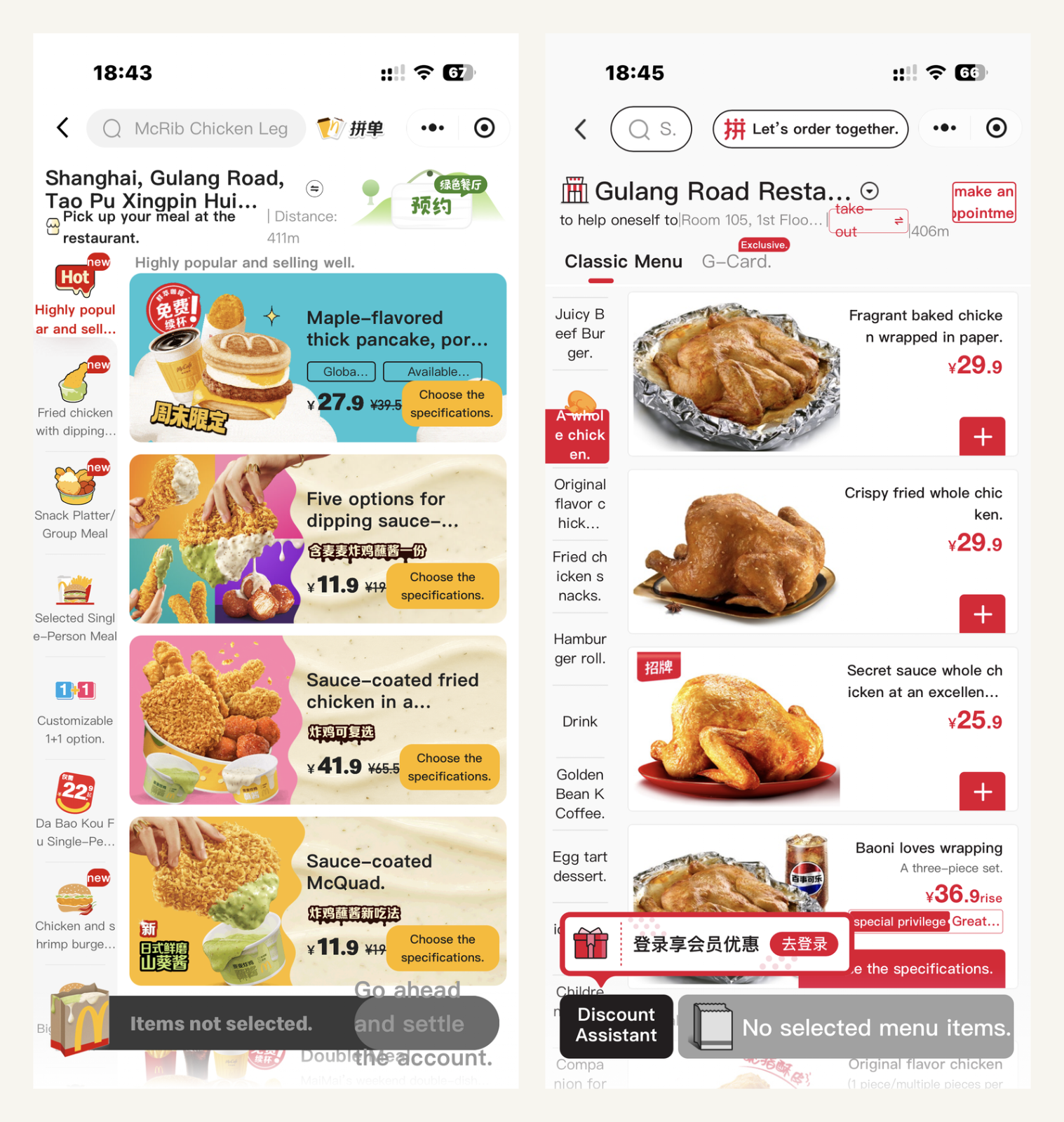
McDonald’s (left) and KFC (right) mini-program ordering screens in China. Menus, translations, prices and offers vary by restaurant, ordering channel and time.
McDonald’s China officially lists staffed counters, self-ordering kiosks, its app and WeChat mini-program among its ordering options. KFC’s official site directs customers toward its app, while its membership environment includes self-ordering and delivery.
For local customers, this ecosystem can make ordering faster. For a newly arrived traveler, it can add friction:
- The first screen may be in Chinese.
- A QR code may open inside WeChat or Alipay.
- A promotion may require membership.
- The app may ask you to choose a restaurant before showing the real menu.
- Delivery may require a usable local address and phone contact.
- A coupon price may not apply at the counter.
- Breakfast items may disappear when the daypart changes.
The good news is that a restaurant displaying a QR code does not necessarily have no other ordering method. Look for a kiosk or staffed counter, or ask an employee for help.
Useful phrases:
-
我想在这里吃。
Wǒ xiǎng zài zhèlǐ chī.
I would like to eat here. -
可以在柜台点餐吗?
Kěyǐ zài guìtái diǎncān ma?
Can I order at the counter? -
这个现在有吗?
Zhège xiànzài yǒu ma?
Is this available now? -
这个辣吗?
Zhège là ma?
Is this spicy? -
不要辣。
Bú yào là.
Not spicy.
Even better: keep a screenshot of the item and show it to the staff.
Which one should a first-time visitor try?
If your goal is to see the broadest menu localization, KFC is usually the more revealing first stop. Breakfast, rice, congee, egg tarts and its history of regional experiments make it easier to see how thoroughly the brand has adapted to local eating patterns.
McDonald’s offers a clearer side-by-side comparison. You can recognize the global core, then notice where China-developed chicken burgers, congee, youtiao and soy milk have joined it.
But the best choice is not necessarily the restaurant with the most surprising menu. It is the one that fits your day.
Try breakfast if you want to see the strongest localization. Visit during a current campaign if you enjoy limited releases. Use a chain on your first morning if you want to practise kiosk or mobile ordering in a relatively predictable setting.
And if you simply need fries after a six-hour train ride, that is also a perfectly valid cultural exchange.
Practical takeaway for travelers
Before you go
- Search the Chinese brand name on your map:
- 肯德基 — KFC
- 麦当劳 — McDonald’s
- Select the exact restaurant in the official app or mini-program.
- Check the current daypart. Breakfast and regular menus differ.
- Treat old menu videos as inspiration, not proof of current availability.
At the restaurant
- Look for a self-ordering kiosk if the QR flow is difficult.
- Check whether the kiosk offers a language switch.
- If needed, ask to order at the counter.
- Verify dine-in versus takeaway before paying:
- 堂食 — dine-in
- 外带 / 打包 — takeaway
- Read the selected restaurant’s live menu for the actual price and stock.
If you have dietary restrictions
Do not assume a familiar international product uses exactly the same recipe as it does at home. Sauces, seasonings, preparation and limited products can differ.
A product without obvious meat is not automatically vegetarian or halal. For serious allergies or dietary restrictions, check current official ingredient and allergen information, ask about cross-contact and carry a written Chinese dietary card.
What these restaurants reveal about China
KFC and McDonald’s are useful precisely because they are familiar.
A neighborhood restaurant presents China on its own terms. A global chain gives you a controlled comparison: same logo, different breakfast; same service promise, different digital habits; same burger category, locally developed bestseller.
The small differences reveal the larger system.
Breakfast is expected to be hot, varied and convenient. Rice can turn a snack stop into lunch. Regional food identity is strong enough to shape a national chain. Mobile ordering is part of everyday infrastructure. Limited menus connect food to fandom, holidays and online culture.
You enter expecting a break from decoding China.
Then the restaurant quietly decodes a little more of it for you.
Order with less guesswork
Trying a familiar chain can be the easy part. Working out the QR menu, payment flow, Chinese food labels and dietary language is where a first trip can become unexpectedly complicated.
Open the trisAino Guide for practical help with mobile ordering, payments, food vocabulary and dietary restrictions in China.
Open the Food & Dining Guide
Get China-ready before you fly
Sources and verification notes
Facts last checked 12 August 2026. Menus, prices, promotions, interfaces and availability should be checked again immediately before publication.