Luckin or MANNER? Two Ways Coffee Fits Into Everyday China
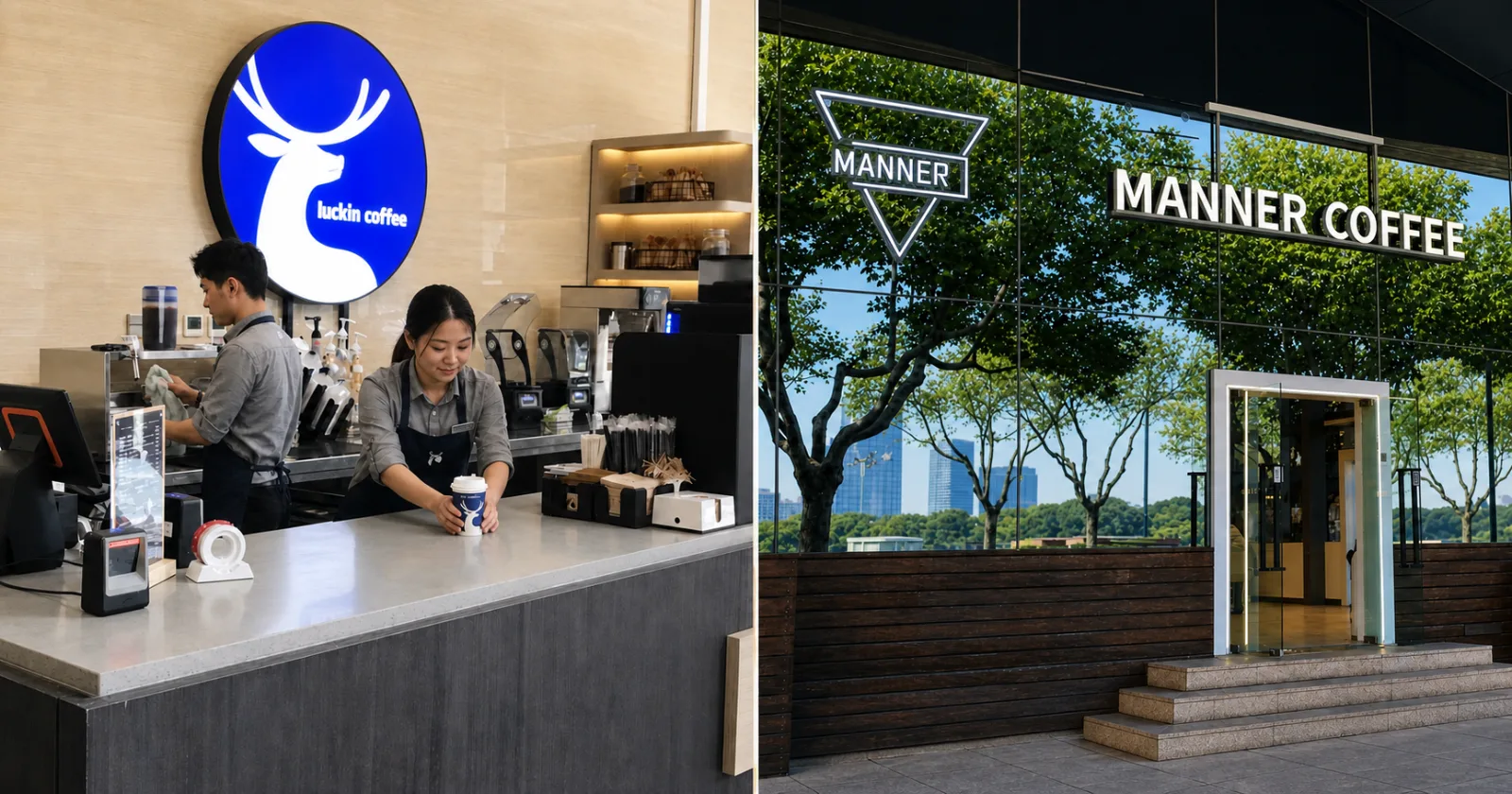
Quick answer: Try Luckin when convenience, fast-moving flavors and app offers matter most. Try MANNER when you want a more compact, espresso-led menu—or when you have brought your own cup. Neither is the universal “better” coffee. They solve different moments in a Chinese city day.
If Starbucks is your familiar reference point, coffee in China may initially look recognizable: espresso, Americano, latte, takeaway cup.
Then you try to order.
At one shop, the menu, payment, coupon and pickup number may all live inside your phone. At another, commuters arrive carrying their own cups and receive RMB 5 off. Coconut lattes are not treated as a niche dairy-free alternative. Jasmine can sit naturally beside espresso. The price printed beside a drink may not be the price the person next to you paid.
Two homegrown chains make these differences particularly easy to see: Luckin Coffee (瑞幸咖啡) and MANNER COFFEE.
This is not a contest to name China’s best coffee chain. It is a guide to two forms of everyday coffee you are likely to encounter—and what each is useful for while you travel.
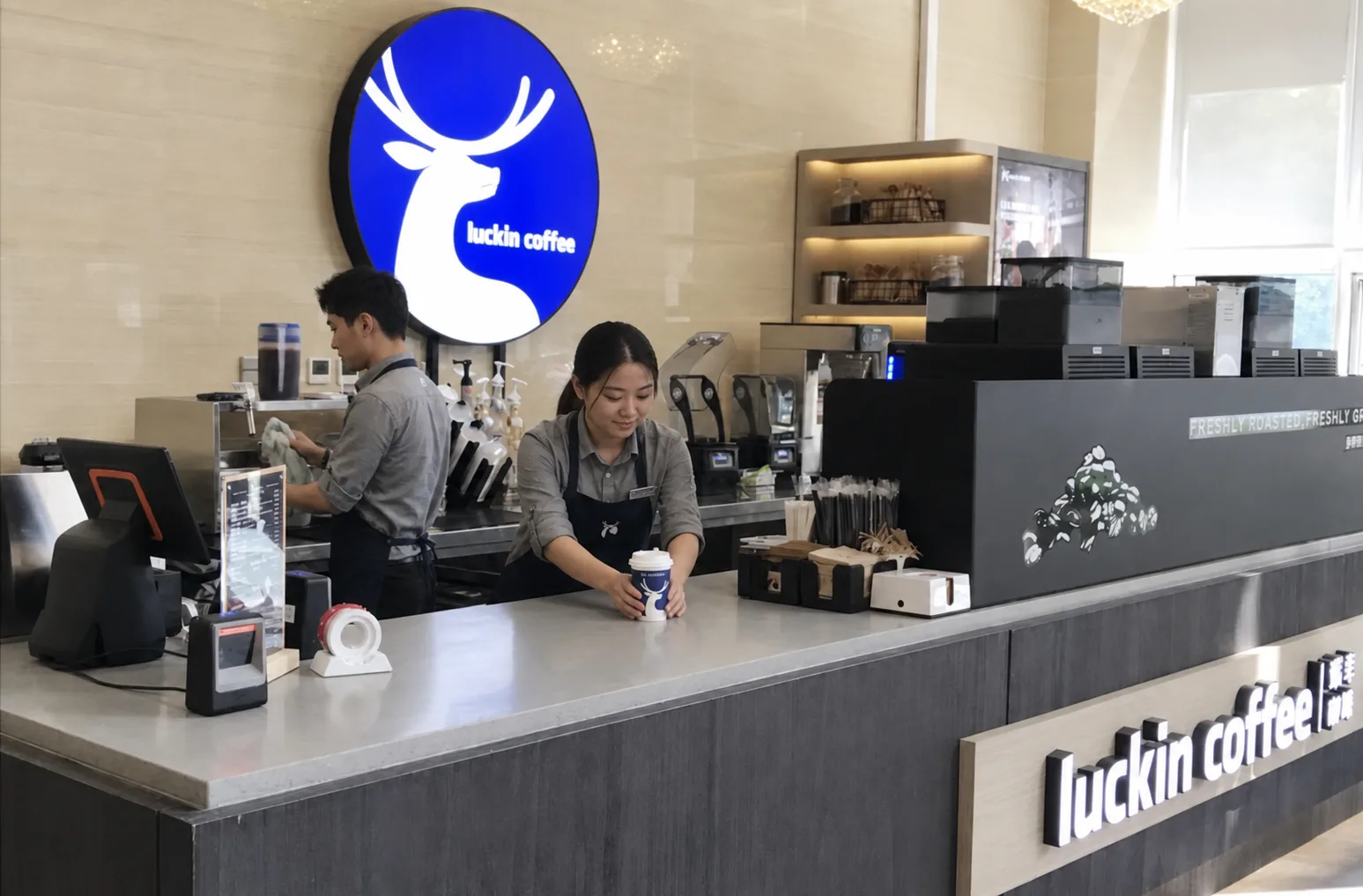
Luckin’s mobile-first pickup environment. Individual store formats vary.
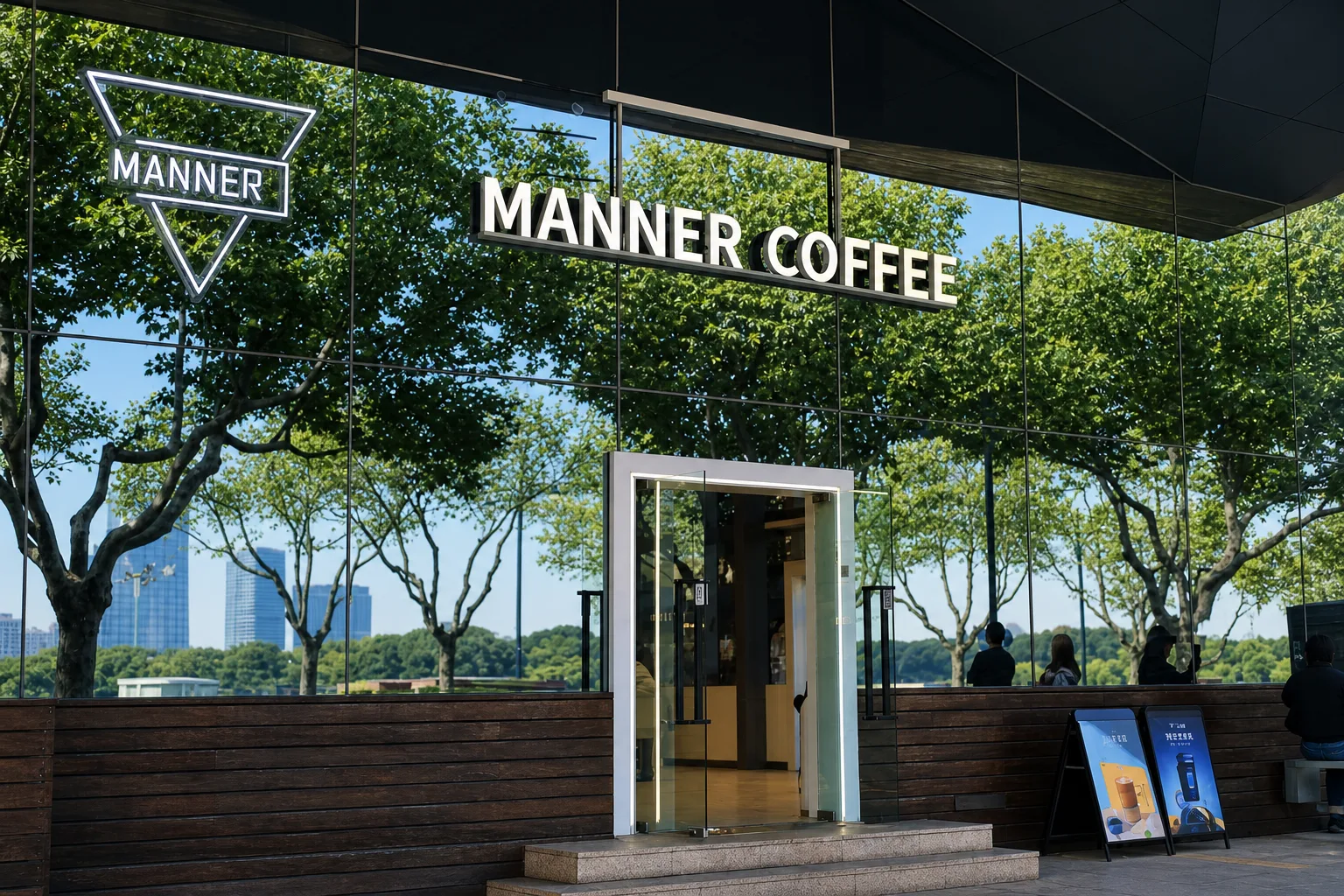
MANNER’s mirrored storefront reframed for summer. It does not document one universal store format.
The short version: two city rhythms
Luckin treats coffee almost like a digital errand. You select a nearby branch, order and pay on your phone, then collect a cup using a pickup number. Many locations are designed for speed rather than a long café stay.
MANNER grew out of Shanghai’s compact urban coffee culture. Its identity remains closer to an espresso bar: a focused coffee menu, many small stores in office and shopping districts, and a reusable-cup discount that can change the economics of a daily order.
| If you want… | Try first |
|---|---|
| A fast pickup between itinerary stops | Luckin |
| Coconut, jasmine or another China-popular flavor combination | Luckin |
| The best available app offer | Luckin—after checking the final checkout screen |
| A straightforward Americano or latte | MANNER |
| A more barista-facing experience | MANNER, depending on the branch |
| SOE or pour-over options | MANNER, where available |
| A discount for carrying your own cup | MANNER |
| Somewhere to sit for an hour | Check the individual branch—neither logo guarantees seating |
Luckin: coffee as a phone-native routine
Luckin is difficult to miss. The company said its global network had passed 35,000 stores by the end of May 2026, with the large majority in China.
Scale is only part of the story. The more revealing detail is how the purchase works.
Luckin describes its retail model as mobile-first and cashierless: customers can use its app and supported digital platforms to choose a store, order, pay and follow the status of a drink. For a local commuter, that can mean ordering before leaving the metro and walking into the shop just as the coffee is ready.
For a first-time visitor, it can mean standing beneath a blue deer logo wondering where the menu went.
“Cashierless” describes Luckin’s default operating flow. It should not be read as a promise that every store refuses cash or that staff can never help. Payment support and ordering options can vary, so ask at the store if the digital route fails.
What to order at Luckin
You can order an ordinary Americano or latte, but the more distinctly Luckin experience begins where coffee overlaps with China’s wider freshly made beverage culture.
The brand’s official product pages currently include:
- Coconut Latte — 生椰拿铁, shēng yē ná tiě
- Jasmine Latte — 茉莉花香拿铁, mòlì huāxiāng ná tiě
- Classic Latte — 拿铁, ná tiě
- Little Butter Latte — 小黄油拿铁, xiǎo huángyóu ná tiě
- Seasonal tea-coffee, fruit-coffee and cold-drink combinations
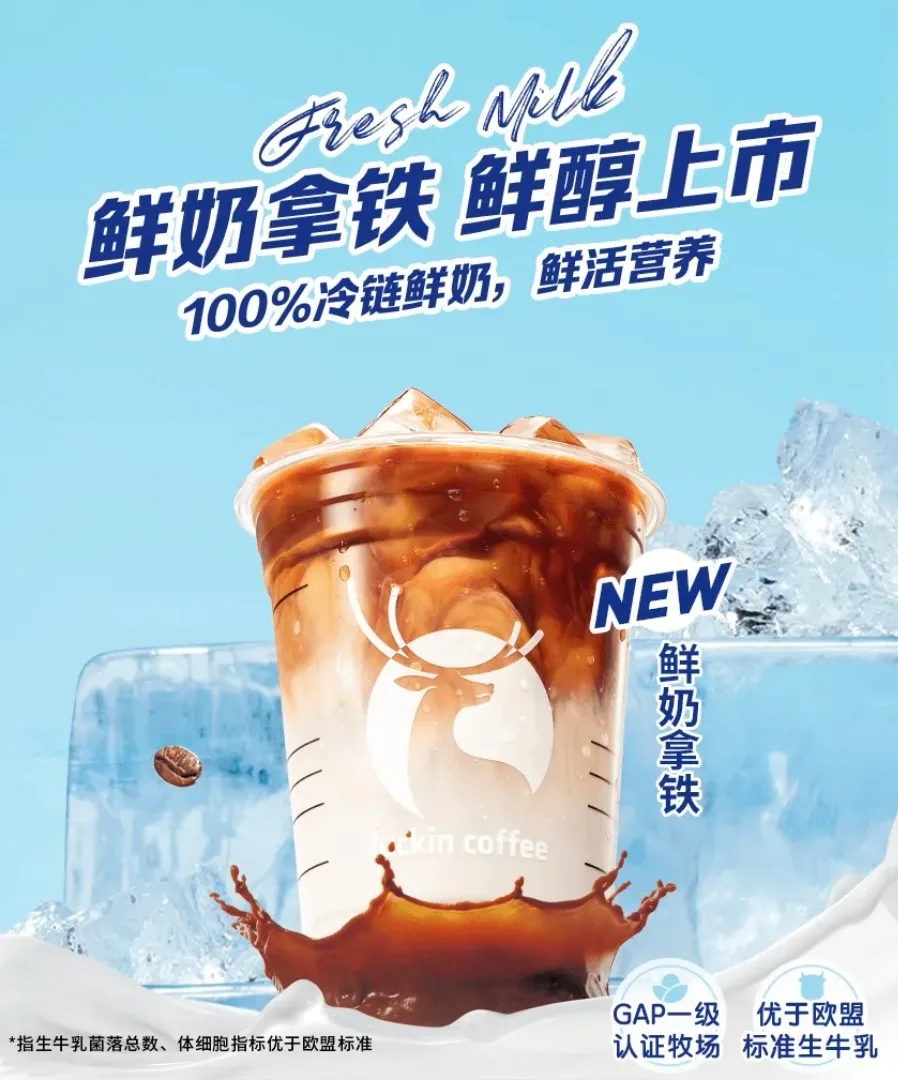
Luckin’s product marketing moves quickly between familiar espresso drinks and new milk, tea and fruit combinations. Promotional screenshot supplied by trisAino; availability can change.
The Coconut Latte is the clearest starting point. Luckin said cumulative sales had passed 2.1 billion cups by May 2026. That number matters less as a corporate milestone than as evidence of how normal coconut-and-coffee has become in China.
This is one of the most interesting differences for international visitors: a coffee chain does not need to behave only like a traditional coffee chain. It can borrow the flavor vocabulary, release rhythm and visual energy of milk-tea brands.
If you dislike sweet drinks, do not assume every latte is neutral. Read the sweetness description and customization options before paying. A screen may say “no additional sugar” while the drink remains naturally or pre-formulated sweet because of its base ingredients.
What does Luckin cost?
There is no single useful “Luckin price.”
The ordering screen may show a list price, an account-specific coupon, a new-user offer or a temporary campaign price. That does not mean every customer can buy every drink at the lowest price seen in an advertisement or social post.
For travelers, the practical rule is:
Treat the final checkout screen—not an old menu photo or someone else’s coupon—as the real price.
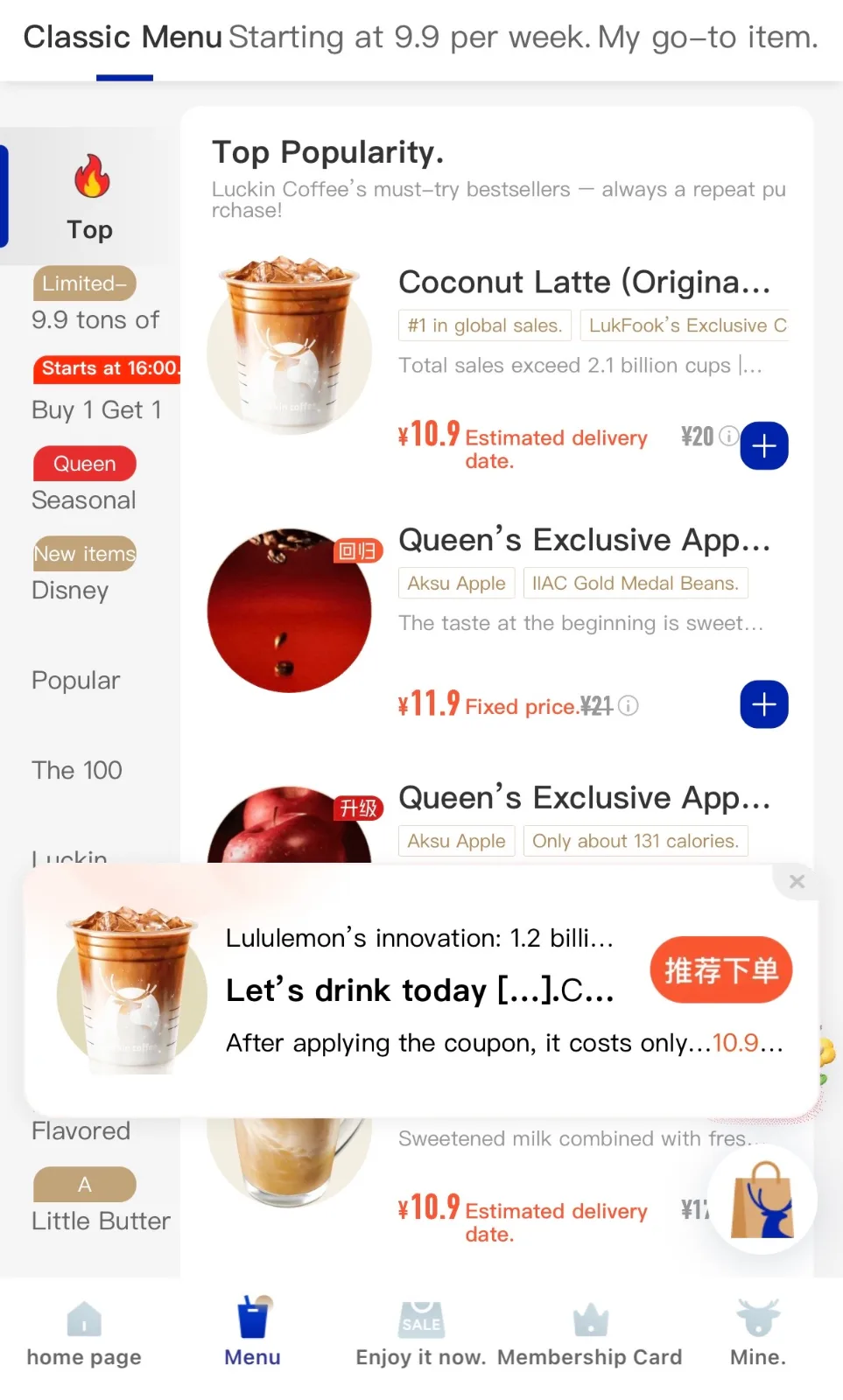
A translated ordering screen shows why the final price needs checking: list prices, campaign prices and account-specific offers can appear together. Interface and prices are time-sensitive.
A promoted drink may cost much less after a coupon, while upgrades, delivery and some seasonal products cost more. Check whether a voucher has actually been selected before paying.
How to order at Luckin
The exact interface can change, but the basic flow is:
- Search for 瑞幸咖啡 in WeChat or Alipay, or use the mainland Luckin app if you can register.
- Confirm the selected branch. A single mall or office area may contain several similarly named locations.
- Choose 到店自取 for store pickup, or the delivery option if that is what you need.
- Select the drink, temperature, milk and other available customizations.
- Check the coupon section and final price.
- Pay digitally.
- Save the pickup number and exact store location.
- Collect the cup when your number is shown or called.
Registration or payment can create friction for international visitors, especially when an interface expects a particular mobile-number or wallet setup. Luckin’s corporate filings confirm support for major Chinese payment methods, but that does not guarantee that every overseas phone number or foreign-issued card will work in every ordering path.
If the mini-program route fails, ask the staff whether they can assist. Do not build a tight morning schedule around guaranteed counter ordering until you have tested the selected store.
Useful screen language:
- 到店自取 — pickup at store
- 外送 — delivery
- 冰 — iced
- 热 — hot
- 少甜 — less sweet
- 不另外加糖 — no additional sugar
- 取餐码 — pickup code
MANNER: coffee as part of the commute
MANNER began in Shanghai in 2015. Its official website currently says the brand operates more than 2,000 directly managed stores across China.
The physical rhythm feels different from Luckin.
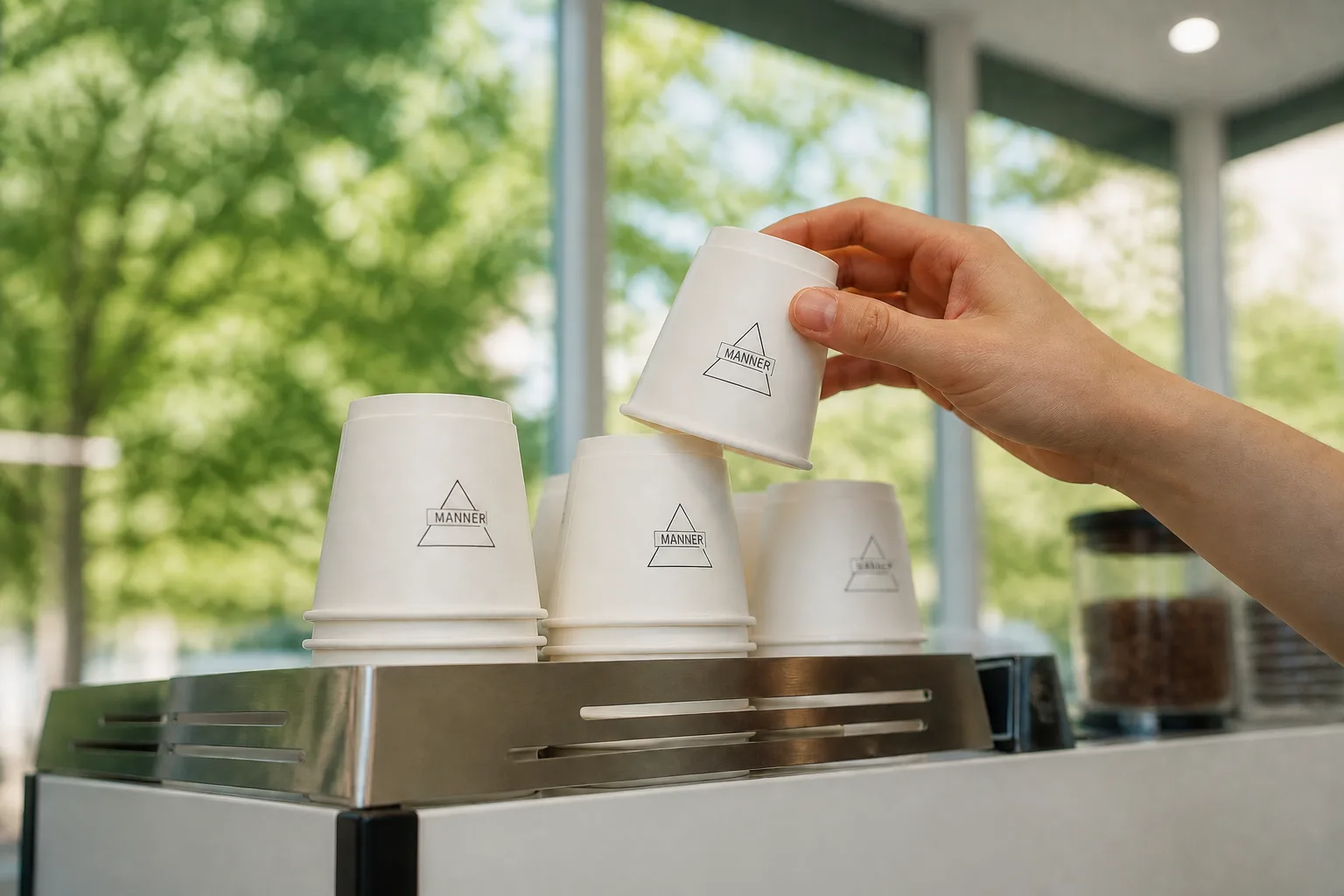
At MANNER, the coffee counter and espresso machine remain visible parts of the routine.
Many branches sit inside office towers, metro-linked malls and busy commercial streets. Some are small enough to function mainly as coffee counters; others have more room or include bakery service. The official website organizes the offering around espresso-based coffee, iced drinks, pour-over and bread rather than one enormous flavor catalogue.
This does not make every MANNER branch a slow specialty café. At weekday peaks, it can be a fast-moving commuter operation. But the cup often feels more visibly connected to the barista and espresso machine.
What to order at MANNER
For a first visit, keep it simple:
- Americano — 美式, měishì
- Latte — 拿铁, ná tiě
- A current SOE option if you want a single-origin espresso
- Pour-over, if offered at that branch and you have time
- Bread or pastry at a bakery-format location
MANNER is the more natural first choice when you already know you want a classic espresso drink rather than a seasonal flavor experiment.
Availability varies. An office-lobby counter may not carry the same food, beans or brewing options as a larger bakery or flagship store. Check the selected branch instead of assuming the full brand menu appears everywhere.
Bring your own cup—and ask before ordering
One of MANNER’s most distinctive everyday details is its reusable-cup policy.
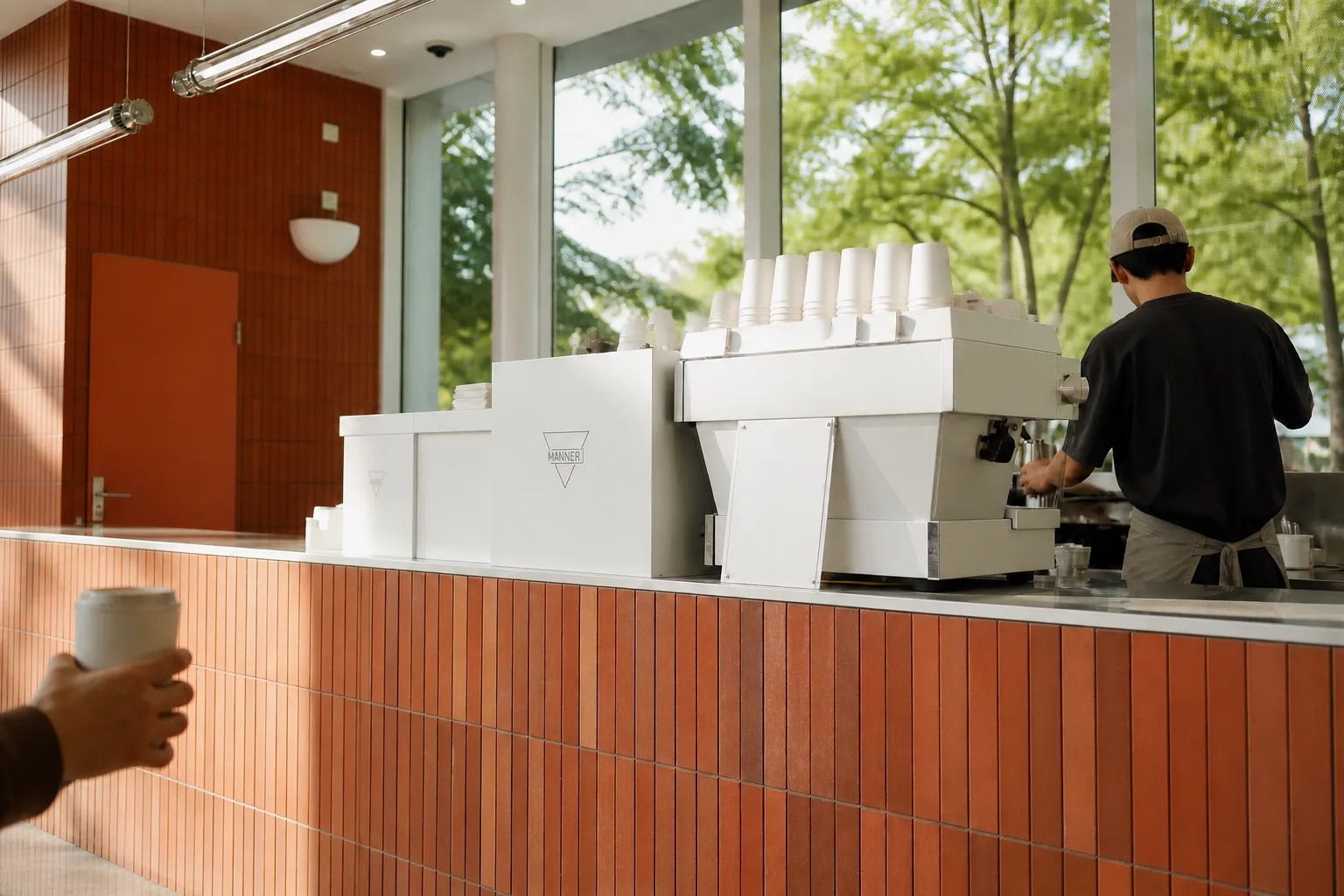
Tell the staff about your reusable cup before the order is entered, then confirm whether the current RMB 5 discount applies.
The company’s official website currently says customers receive RMB 5 off when they bring a non-disposable cup. It produces a particularly memorable morning sight: office workers arriving with insulated tumblers, travel cups and sometimes very ordinary mugs from home.
Tell the staff before the order is entered:
我有自带杯。
Wǒ yǒu zìdài bēi.
I brought my own cup.
Bring a clean, practical cup and confirm that the branch can apply the discount.
How to order at MANNER
At many locations, starting at the counter may be the simplest option for a visitor. Show the Chinese drink name if pronunciation is difficult, then use a payment method accepted by that store.
MANNER also supports advance ordering through its digital channels. If you use a mini-program:
- Confirm the branch carefully.
- Select pickup rather than delivery.
- Check whether your drink or brewing method is available there.
- Pay and keep the order number.
- Allow extra time during the morning office rush.
If you have brought a reusable cup, ordering at the counter is the clearest way to hand it over and confirm the discount.
The availability of English interfaces, overseas-number registration and foreign-card payment should be tested in a real branch before this article makes any stronger promise.
The part that feels especially Chinese
Luckin and MANNER are not the whole Chinese coffee scene. Independent cafés, convenience-store coffee and other national and regional chains add many more variations. But these two reveal habits travelers will notice far beyond coffee.
1. The store is not always where the transaction begins
At Luckin, the transaction may be nearly complete before you enter. The physical shop is partly a production and pickup point.
That is not just a coffee quirk. It is a small introduction to how mini-programs, digital payments and order-ahead systems shape everyday services in China.
2. “Coffee flavor” has flexible borders
Coconut, jasmine, fruit and tea are not treated as threats to coffee’s seriousness. They are part of a fast-moving beverage vocabulary.
Luckin is the clearest expression of this. MANNER remains more restrained, but it also moves between espresso, seasonal drinks and different bean preparations.
3. List price and paid price can tell different stories
Luckin teaches you to look for the coupon before checkout. MANNER teaches you that carrying a cup can be worth an actual RMB 5.
In both cases, “How much is a latte?” may be less useful than “What will I pay at this branch, through this ordering channel, today?”
4. A chain name does not guarantee a place to linger
Some branches have comfortable seating. Others are counters beside office lifts.
Before planning a work session or long break, check recent store photos and look for 堂食—dine-in—rather than assuming every coffee shop functions as a sitting room.
So which one should a traveler choose?
Choose based on the moment, not the logo.
Try Luckin when:
- You want to experience China’s phone-native retail culture.
- You need a quick pickup during a sightseeing day.
- You are curious about coconut, jasmine or seasonal coffee hybrids.
- You are willing to navigate a digital ordering flow to find the actual offer.
Try MANNER when:
- You want an Americano, latte or espresso-led drink without studying a large seasonal menu.
- You prefer starting the interaction at a coffee counter.
- You want SOE or pour-over and the branch offers it.
- You already carry a reusable cup.
- You want to see how Shanghai-style commuter coffee became a national routine.
Or try both. Order a Coconut Latte from your phone one morning, then carry your own cup into a MANNER the next.
The comparison is not really about which coffee wins. It is about what each purchase reveals: one version of urban China built around the screen, and another built around the counter, the commute and a cup brought from home.
Practical takeaway
Before your first coffee run in China:
- Set up Alipay or WeChat Pay.
- Learn how to search for a mini-program.
- Save the Chinese brand names: 瑞幸咖啡 and MANNER咖啡.
- Confirm the exact branch before paying.
- Read the sweetness setting, not only the drink name.
- Keep the pickup number on screen.
- Check recent photos if seating matters.
- Bring a clean reusable cup to MANNER if you want to request the RMB 5 discount.
- Treat menu items, promotions, prices and store counts as time-sensitive.
Decode the rest of your China day
Coffee is a small purchase, but it introduces several systems you will use throughout China: mini-programs, digital payments, pickup numbers and location-specific listings.
Open the trisAino Guide to get those basics ready before you land—so your first coffee can remain a coffee, not a technology test.
Open the China-ready Guide · Plan my China trip
Sources and verification notes
Facts last checked 12 August 2026. Menus, prices, promotions, interfaces and store counts should be checked again immediately before publication.
- Luckin Coffee official product page
- Luckin Coffee 2025 Form 20-F
- Luckin Coffee store and Coconut Latte milestone
- MANNER COFFEE official website
- Guide to payment services in China for overseas visitors
Independent editorial comparison. trisAino is not affiliated with or endorsed by the brands mentioned.